Redesigning Ansarada for audits
June 2022 - October 2022
The problem
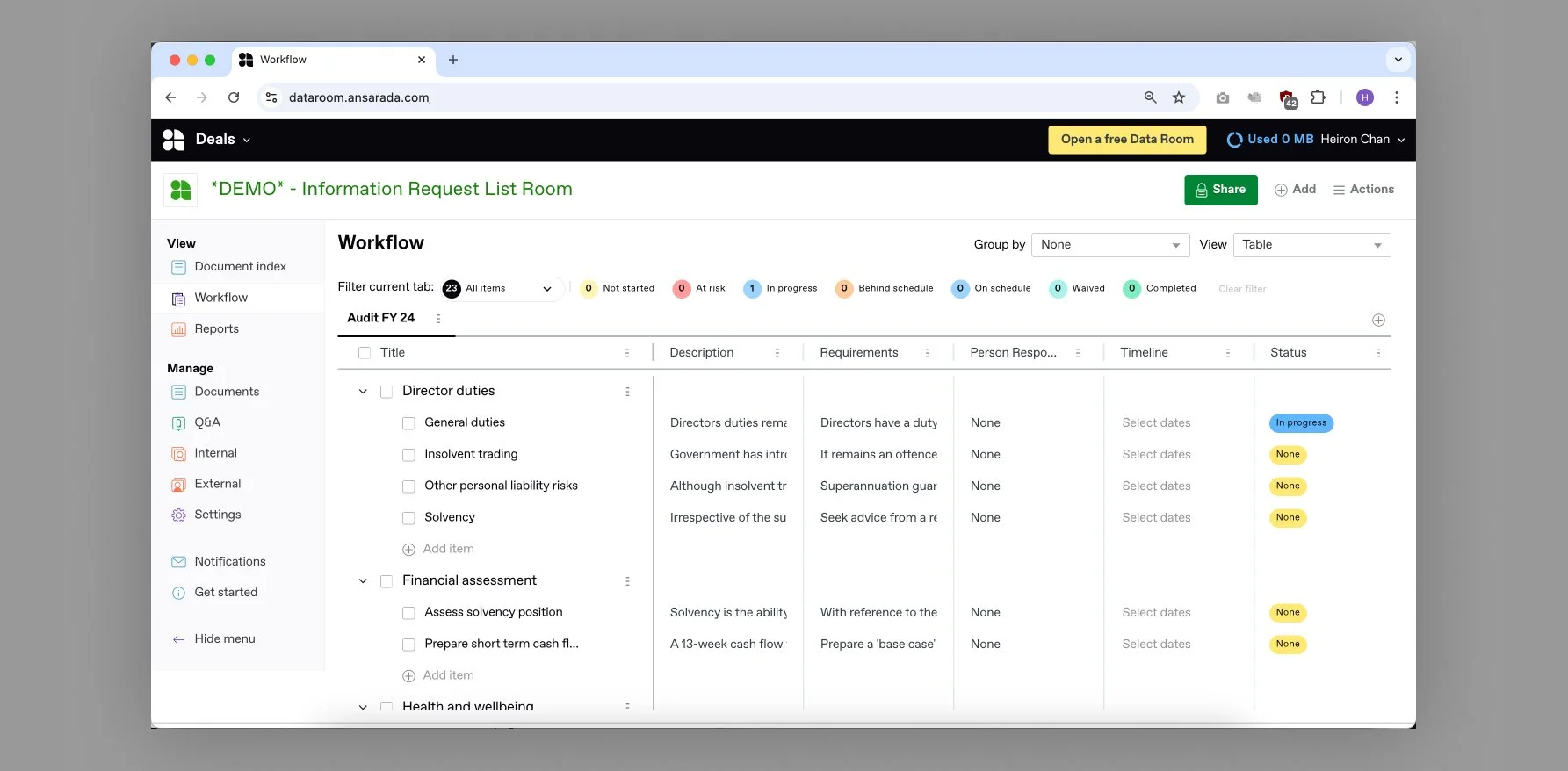
In response to the damaging effects of COVID-19 on business, our team and I were tasked to repurpose Workflow (Ansarada’s task management product) for audits, a recurring business event more resistant to global market conditions and pandemics.
Prior to this strategic shift, our team and I were developing Workflow for the purpose of Mergers & Acquisition (M&A), a use-case that experienced major disruptions and downturn due to COVID-19.
Outcome & impact
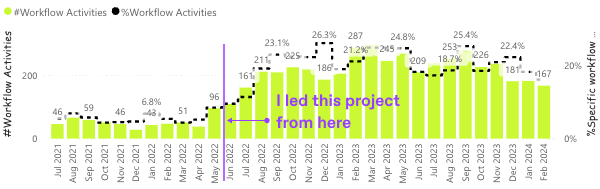
The improvements to Workflow from this project led to new records in engagement and activity.
The feature improvements from this this project combined with redirection of users to Workflow, increased workflow engagement from an average of 9.6% of data rooms in June 2022 to 22.6% in October 2022.
UI and UX improvements set up the foundations to how we retained Google for a 6-figure subscription along with other customers like Grant Thornton, AJ Gallagher and Steadfast Group.
In the lead up to this strategic project, our team and I delivered 12 improvements for the sell-side M&A use-case. We increased Workflow engagement from only 2 data rooms in May 2021 to 39 data rooms in June 2022.
However, this project was discontinued due to market saturation with competitor products products and also because our CEO decided to shift Ansarada towards Environmental Social Governance (ESG) initiatives.
My design process
Discovery research
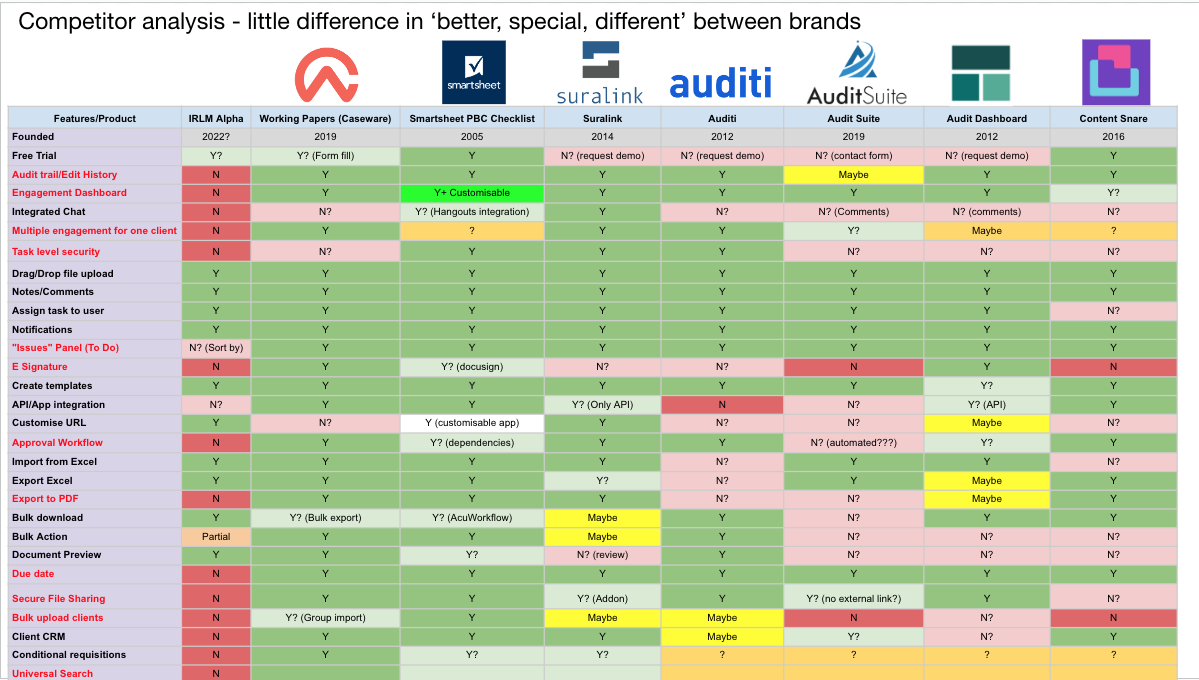
To align on what mattered most, our team and I benchmarked 7 competitor tools to identify table stakes features to match auditing tools on the market.
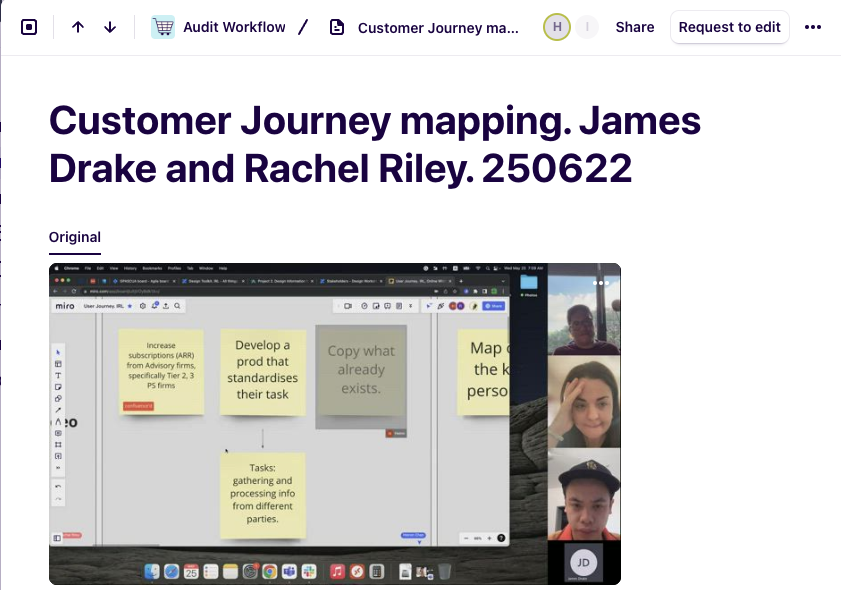
To close our team’s knowledge gap on audits, I facilitated multiple workshops with our co-founder, CFO, and finance team. My goal was to understand the audit process and to create shared understanding of the key problem we’re solving.
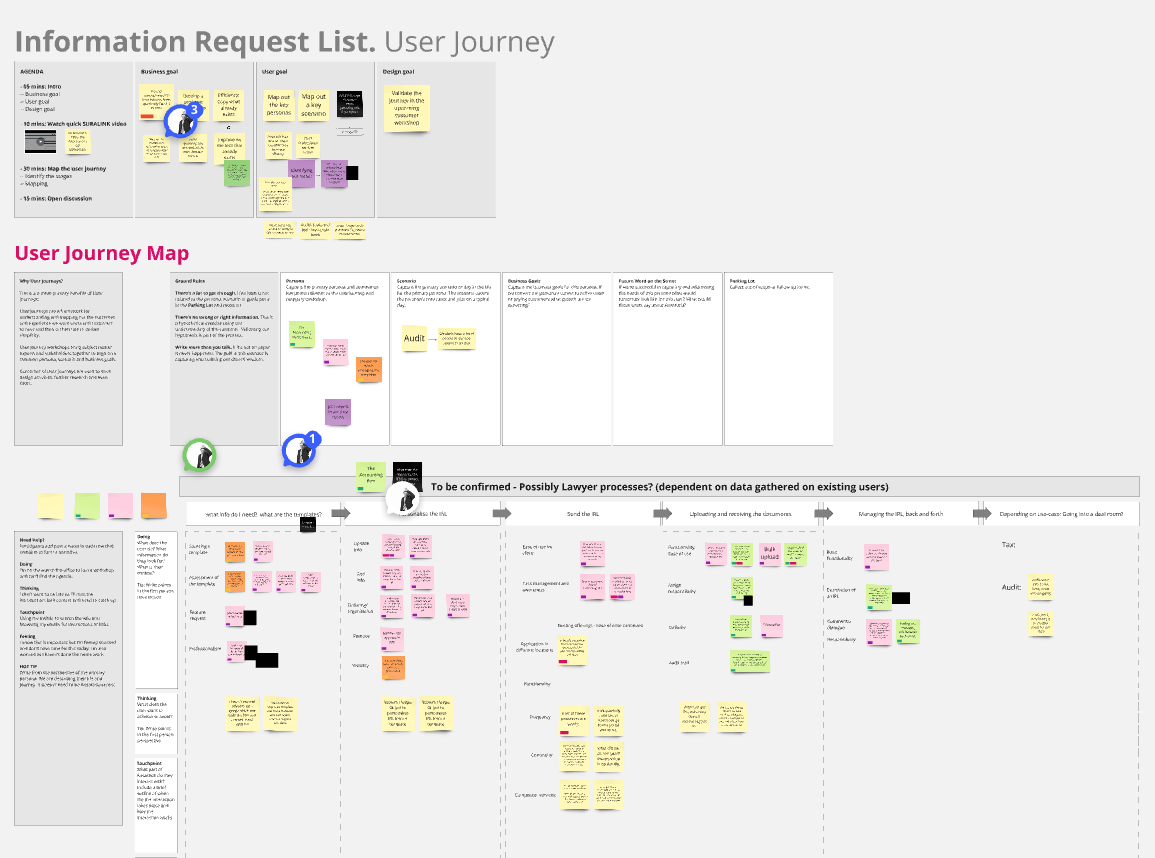
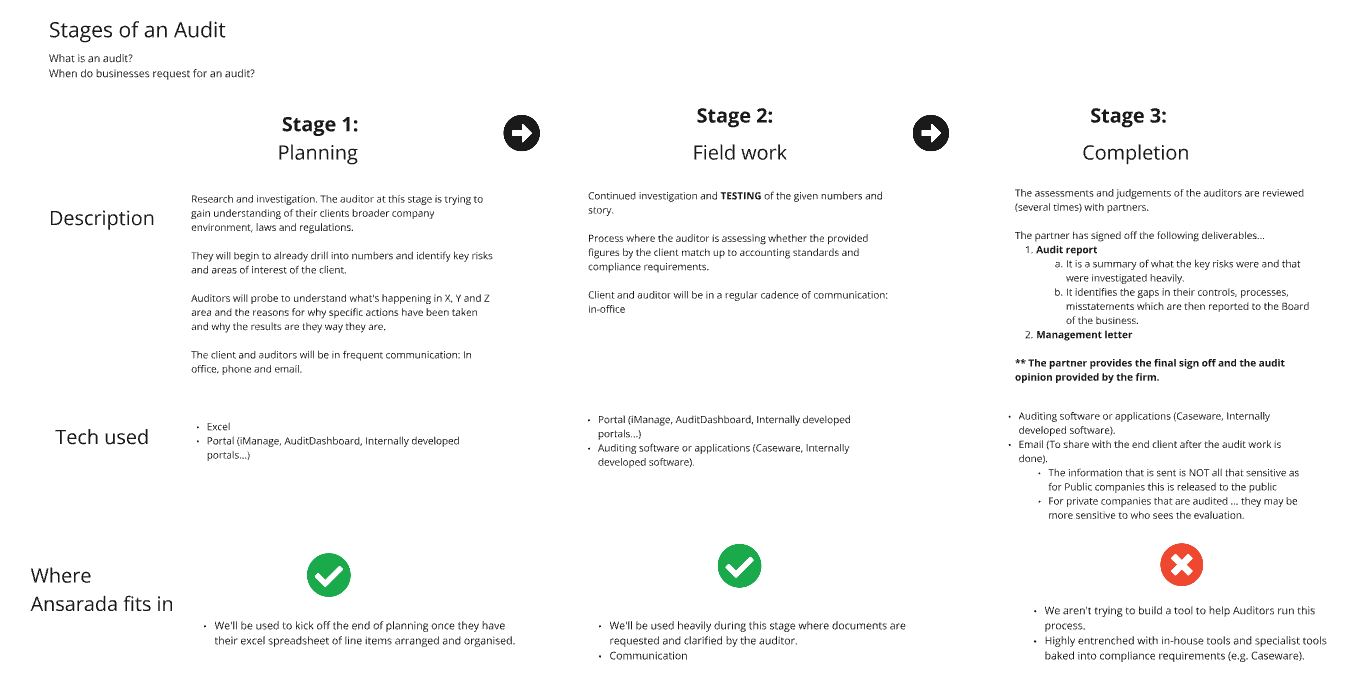
To create shared understanding for our team, I created a journey map of an audit, detailing the stages of an audit, the tools and processes involved and identified where Workflow could fit and deliver value in the audit process.
Rapid prototyping to test for Product-Market-Fit
With sufficient research done, I rapidly began concept designs. Speed was crucial because of several red flags I observed from this project:
Firstly, leadership was bullish about this initiative yet there had been no prior research or investigation done about product-market fit.
Secondly, Workflow was still a newly developed product and from our competitor research, lacked many of the table stakes features to compete as a general task management tool (e.g. Monday.com, Asana etc.), which our team learned after the project was assigned to us.
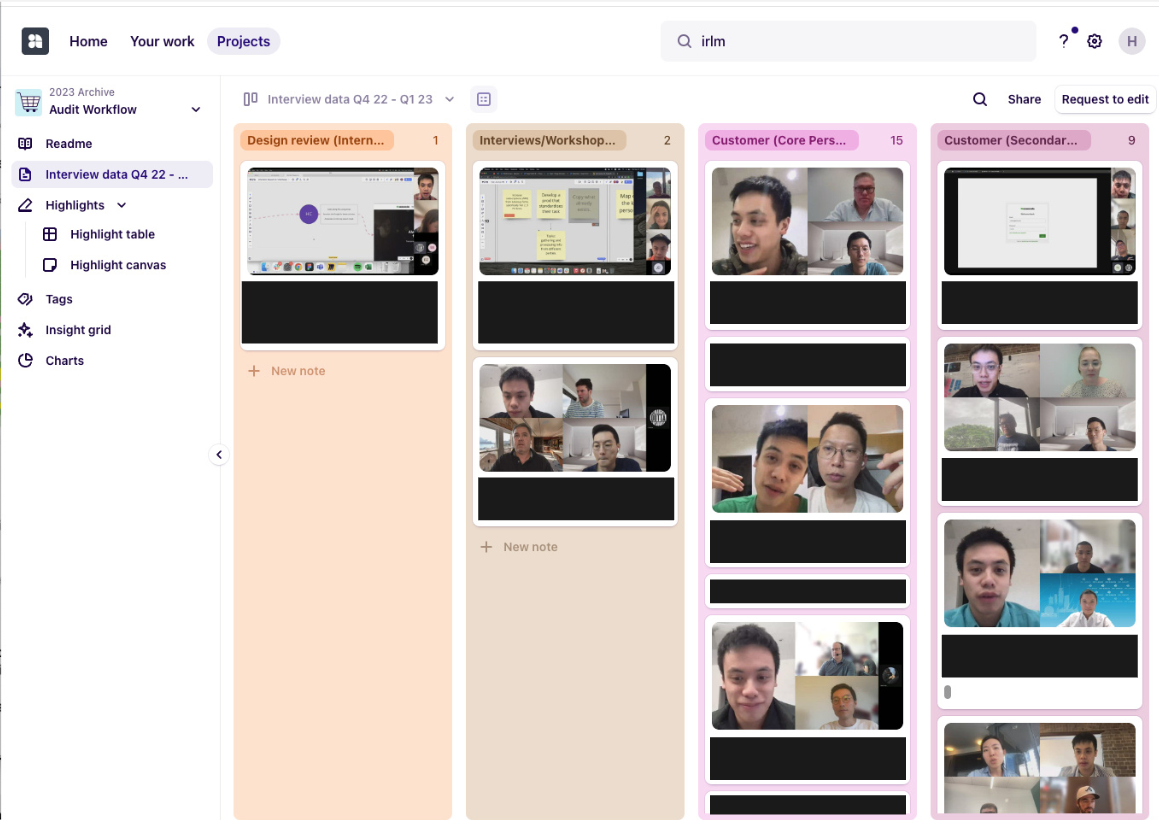
In order for me to put forward a valid point of view, I needed data and insights from real users. With concept designs done to reasonable level of fidelity, I sourced, contacted and interviewed 7 auditors a range of Tier 1–3 firms to gather feedback about our proposed design and scope.

Challenging direction
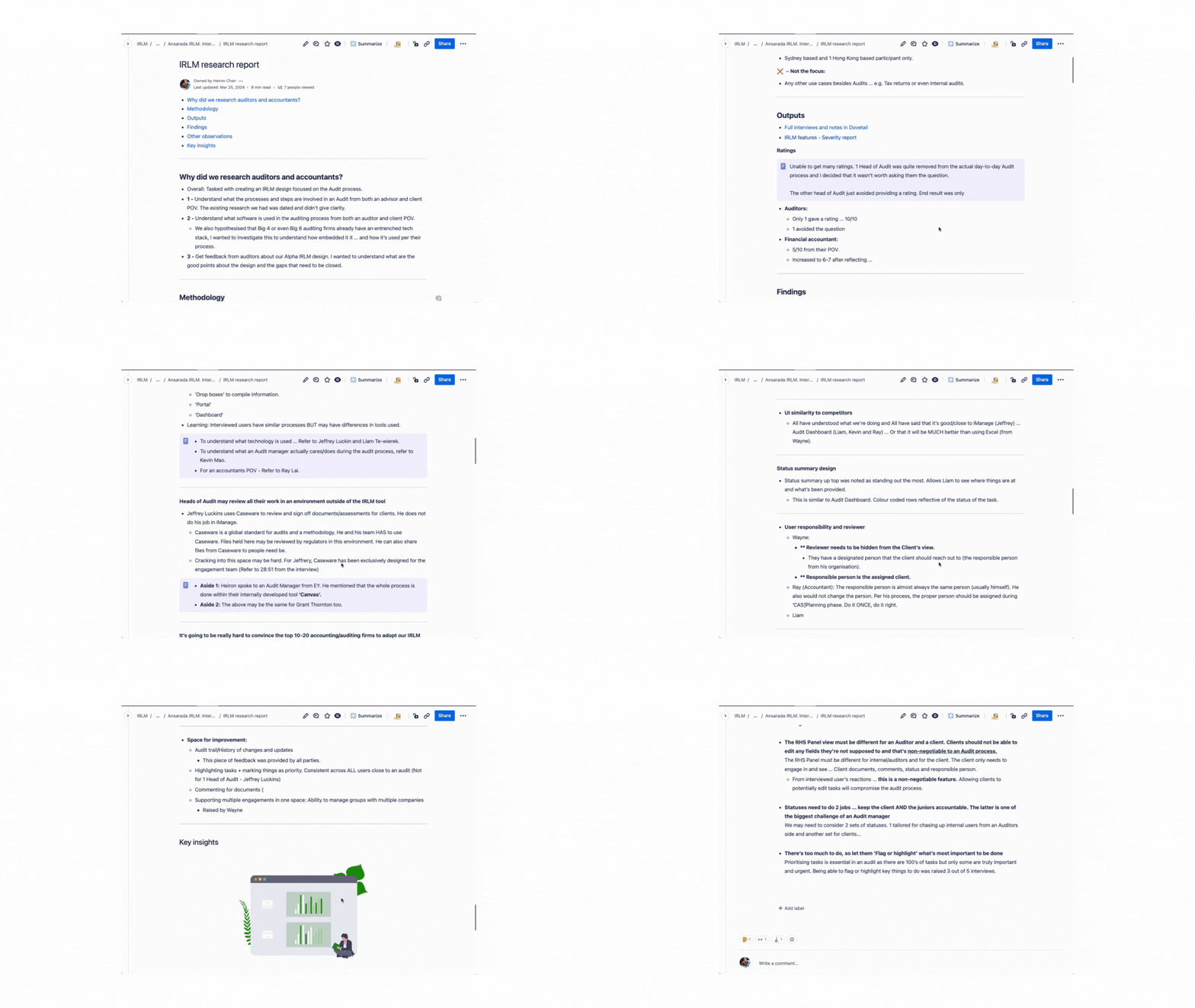
I synthesised the user validation with the 7 auditors into 2 research reports which revealed that most auditors were deeply embedded with existing tools—and switching to any alternative would require clear, compelling value.
Based on my research, I shared my learnings and publicly challenged our current direction during a design review, recommending we reconsider the audit-specific path.
Shortly after, due to other business changes too, our CEO decided to stop this project and to refocus our team back on M&A deal preparation instead of audits.
What we delivered and launched for auditors
In 4 months, we delivered an early stage MVP of an audit product.
Although we saw significant increases in Workflow engagement from scaling the improvements to the sell-side M&A use-case (See outcome and impact), our MVP for audits was not iterated upon due to strategy changes in the business.
Nonetheless, our improvements in audits continue to be used by customers today and are highlighted below.
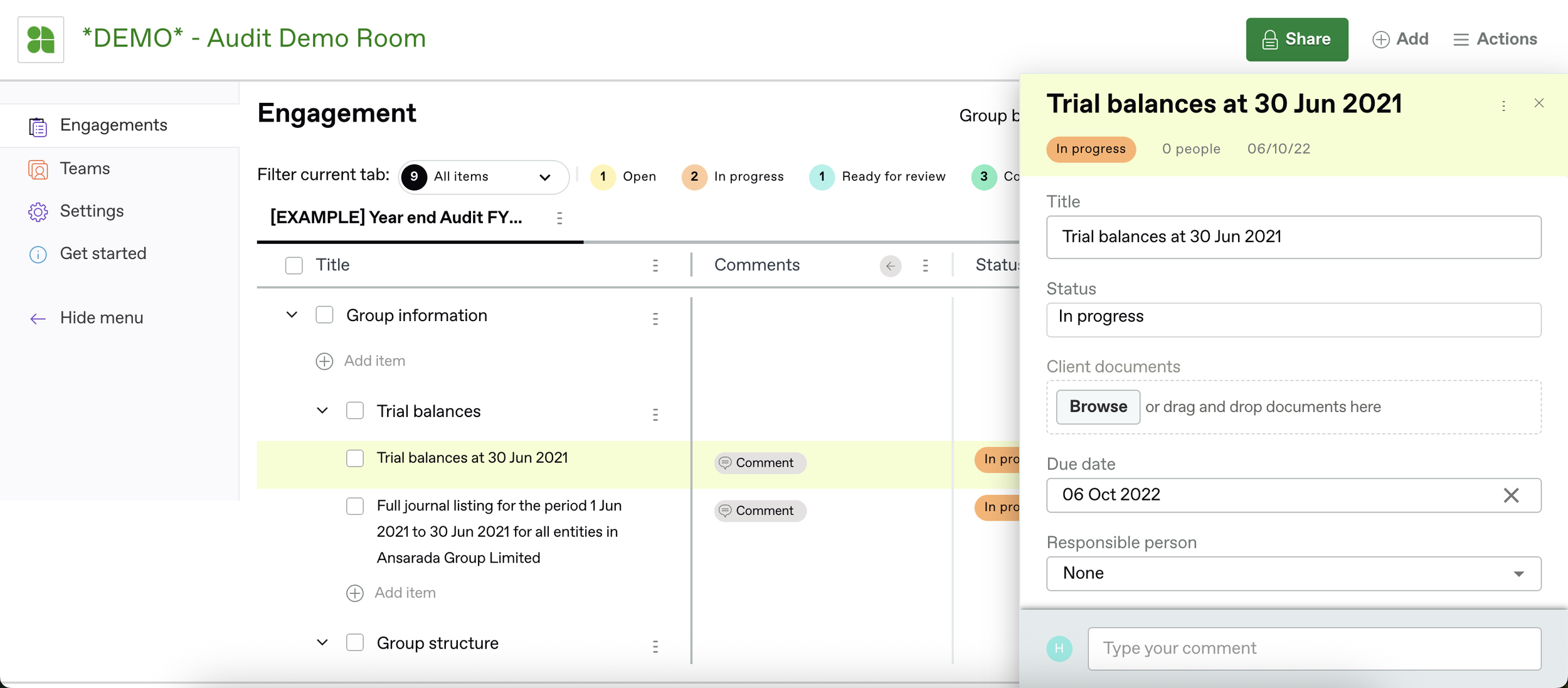
Improvements scaled from the audit MVP:
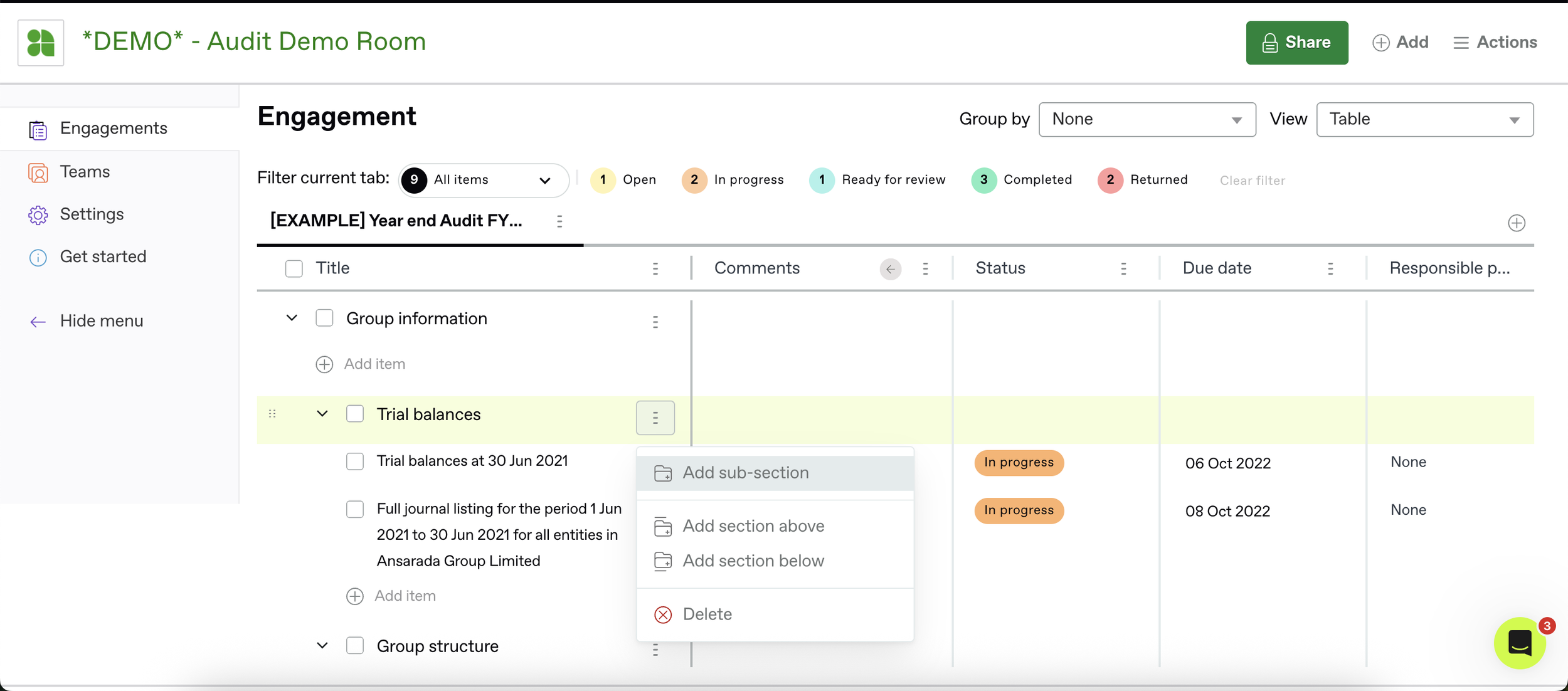
1) Status summary and filters: Enable users to review project progress at a glance and filter outstanding tasks.

2) Properties panel: Helps our users view and collaborate on tasks in one place.
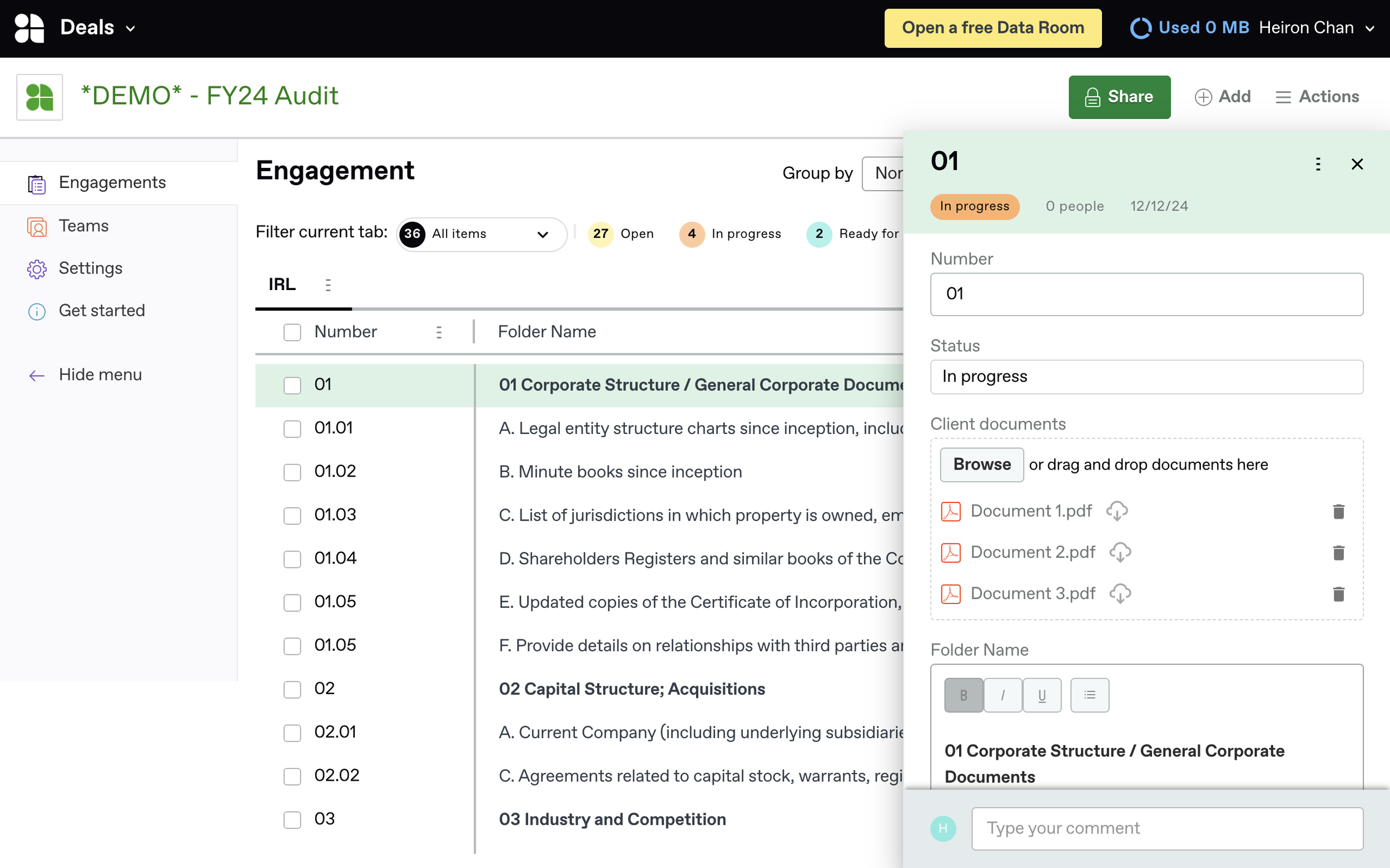
3) Infinite sections (and sub-sections): To help customers better organise and structure their Workflow task list.