
Redesigning Ansarada for COVID-19
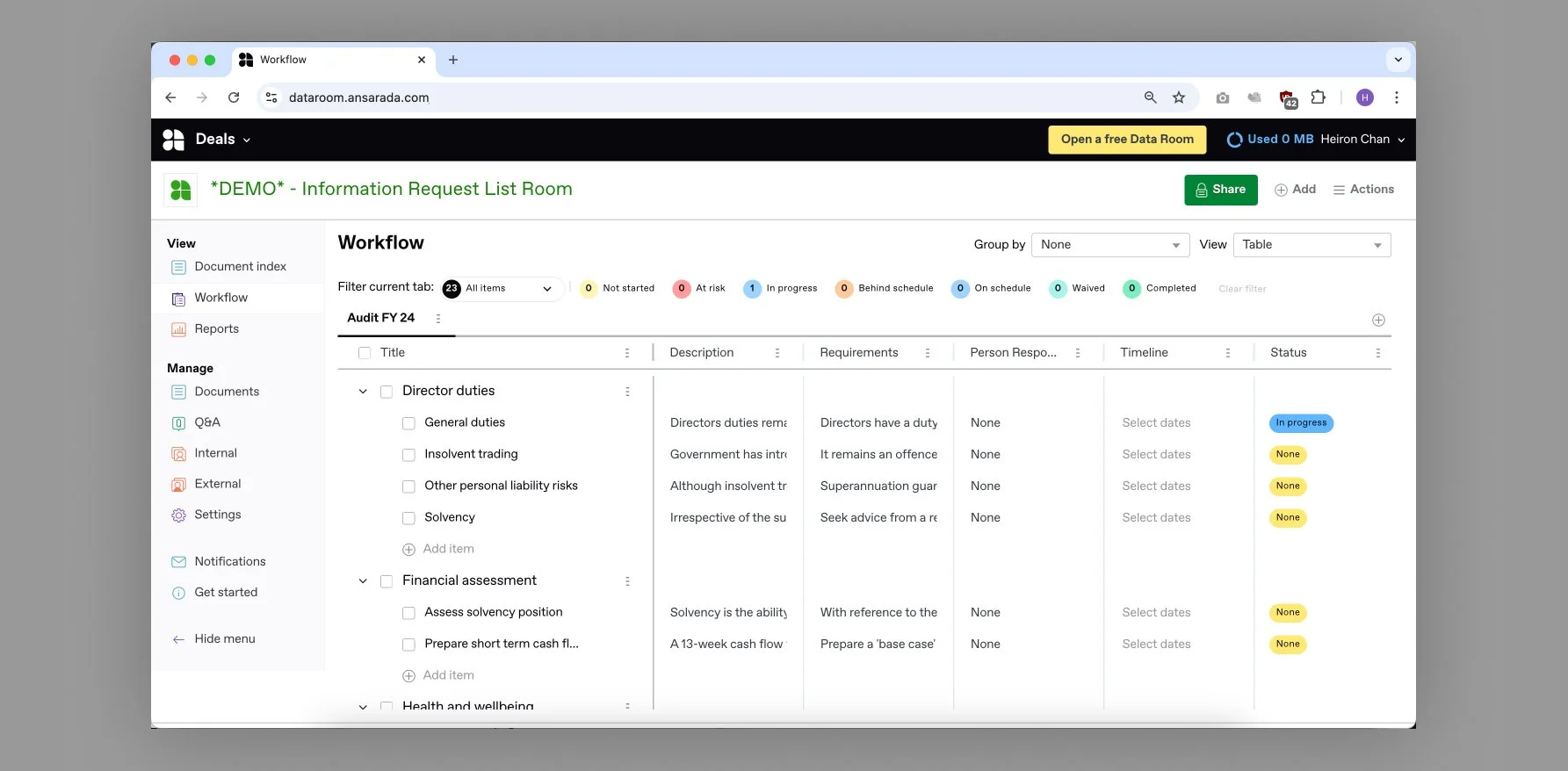
Overview
Duration of project: June 2022 - October 2022
Role and responsibilties: Product designer.
Before this project to adapt Workflow for Audits, I was leading the design of Workflow project for over a year for the deal preparation process involved in M&A deals. During that span of time, the 8+ designs I delivered increased overall engagement of Workflow by 2.6%, going from being used in 2 data rooms in May 2021 to 39 data rooms by July 2022.
For this project, I led the end-to-end design effort from discovery research through concept design to even design researcher, engaging with customers/target persona to test the project hypothesis.
The COVID-19 pandemic caused global economic uncertainty and market volatility creating a significant downturn in global deal activity.
As Ansarada is a virtual data room provider, highly dependent on the health of the global deal market, COVID created a domino effect in severely affecting the demand for Ansarada’s services.
To address this problem and mitigate this problem for the future, our product team was tasked to repurpose the data room to solve a recurring business problem independent of market conditions, managing Information Request Lists for audits.
Problem
Before an audit can start, an auditor must obtain a checklist of key information from their client. A typical information checklist is made up of either questions (about the business or document requests made to the client.
The hypothesis was that, Tier 2 and 3 auditors rely on inefficient legacy tools (Excel spreadsheets combined with Email) to complete Information Request Lists. Both the auditor and the client have to manually reconcile and tick off tasks done on Excel attached in an email.
Conversely, Tier 1 auditors (e.g Ernst & Young, Deloitte, PwC ...) would have in-house tools because of their size, revenue and overall access to resources.
Our team and I were tasked to test this hypothesis and tap into this use-case by repurposing Workflow, our task management tool embedded in Ansarada.
Prior to this project, our team and I were already building Workflow for over a year - but it was for a separate yet similar use-case, deal preparation for M&A deals. Like an Audit, there is also an information preparation process involved in M&A deals in which people use Excel and email to collaborate.
Design
Discovery research
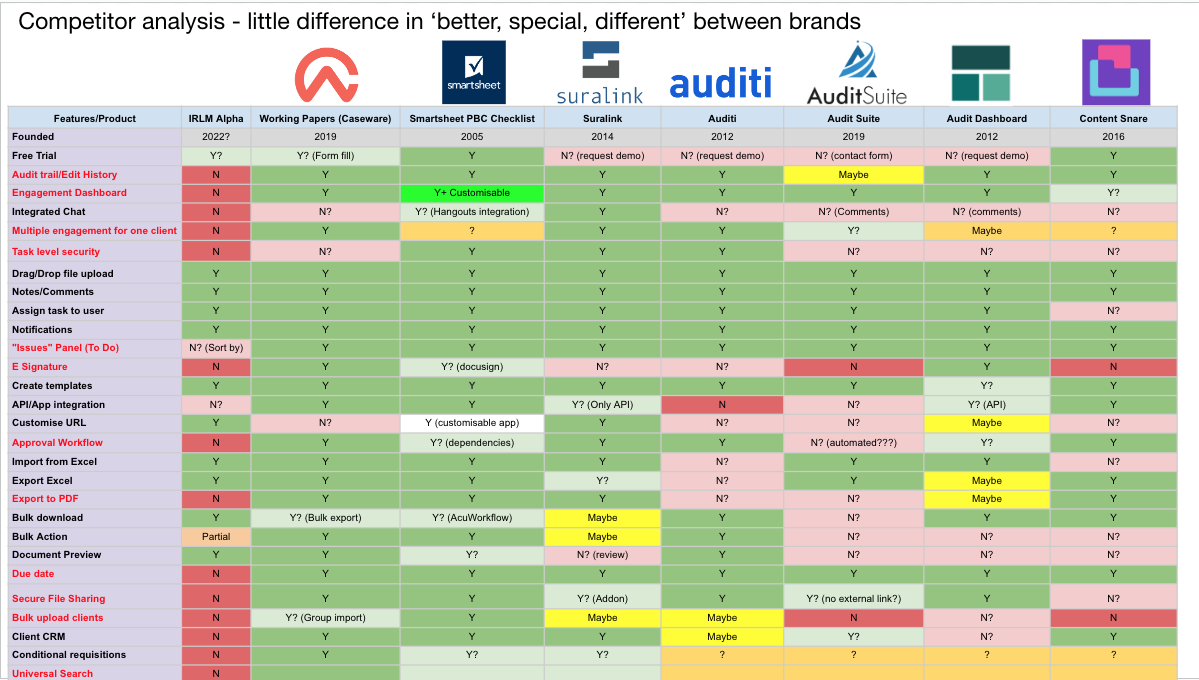
Competitor Analysis: Our team and I analyzed 7 competitor products and identified table stakes features that we needed to have to be in par with competitors. Our goal was to identify the baseline features to match competitor products and in process understand how much effort it would take to design and engineer the MVP.
Secondary research
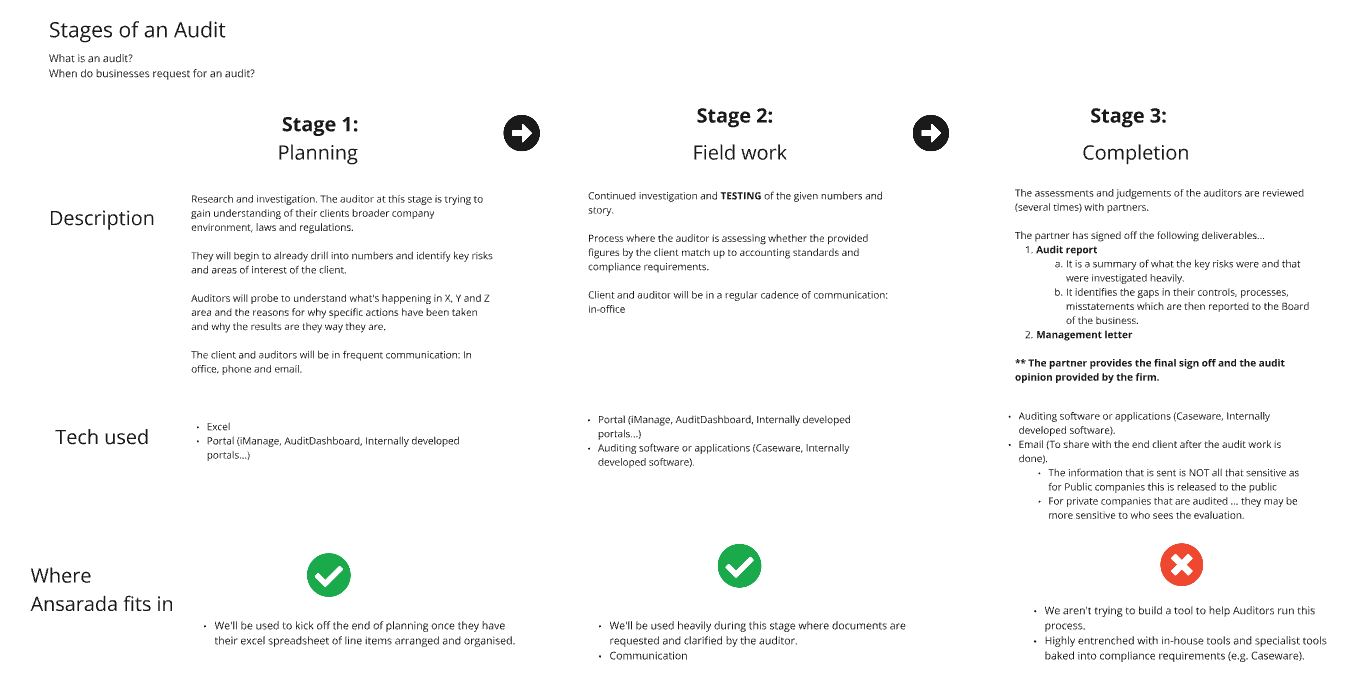
Reviewed online, internal and competitor resources to understand the audit process, creating a process map. I wanted to be informed on a high level, how an what tools are used in an Audit and how Ansarada fits into the process.
Primary research
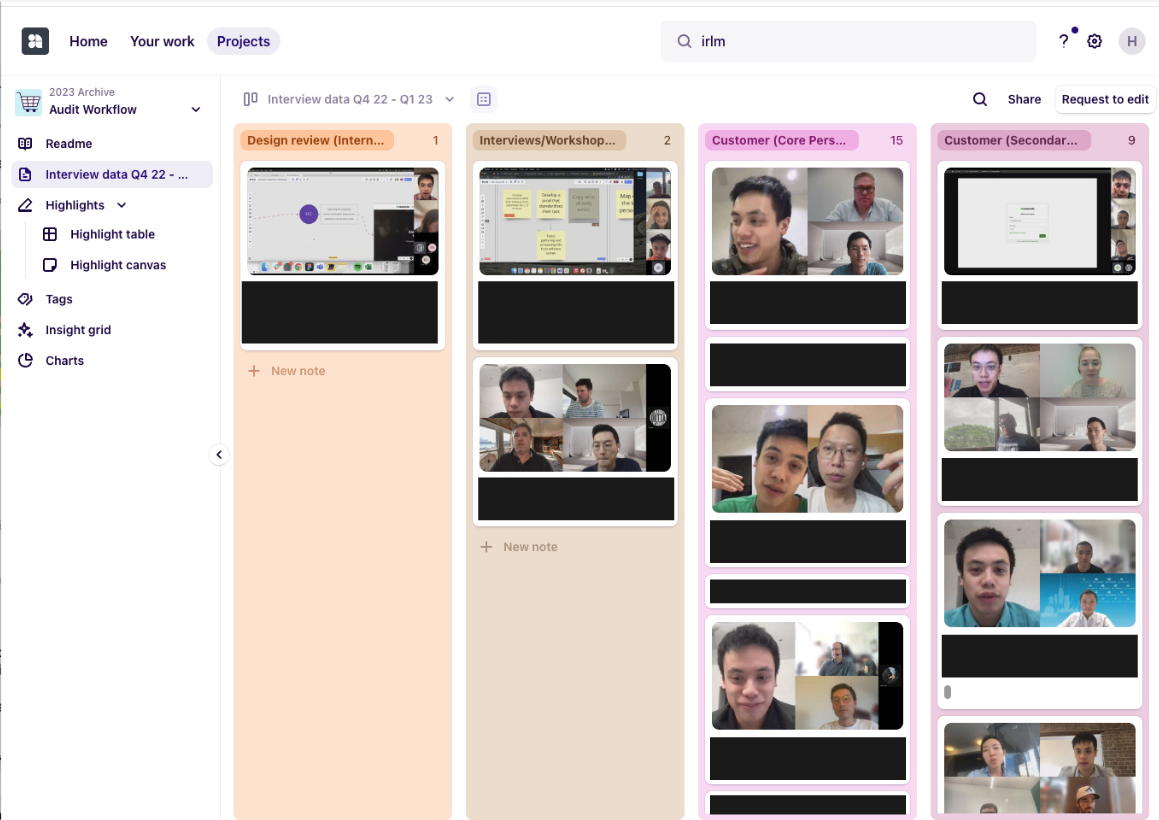
Conducted 3 internal stakeholder workshops and conducted 5 user validation sessions with our target persona. Details of this activity are explored in ‘User validation’ below.
Understanding requirements
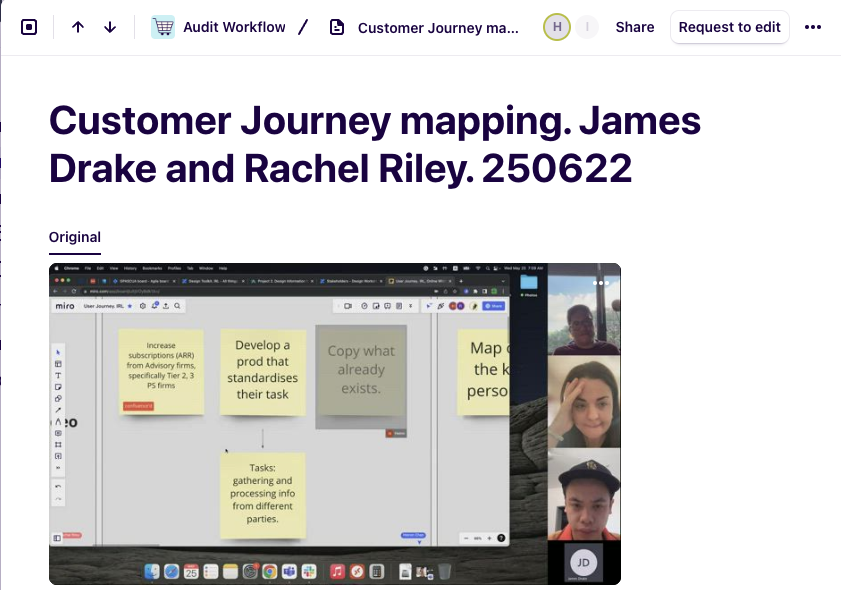
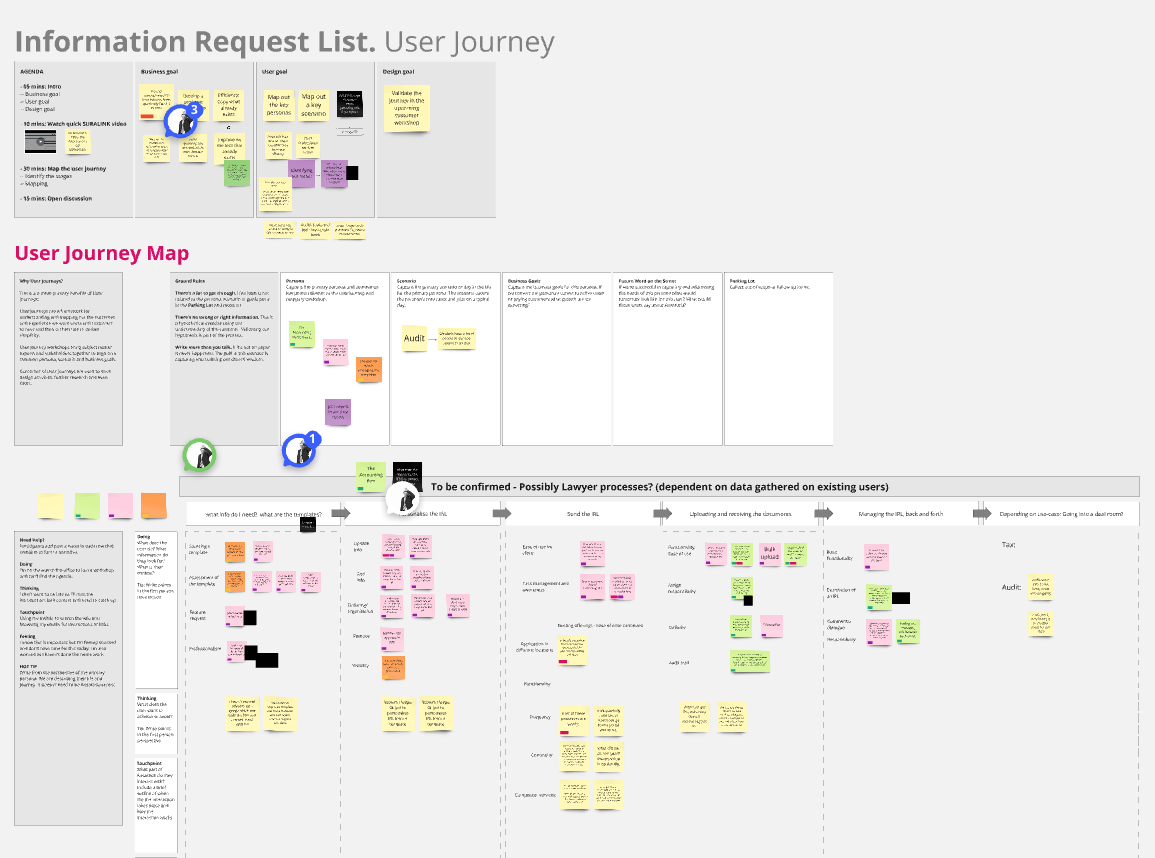
Collaborated with the product team to clarify requirements and prioritize features. This involved using workshops to map out the user journey with internal stakeholders (CFO, Finance manager) that were used to inform process maps.
Initial Low-Fidelity designs
I created low-mid fidelity wireframes based on desk research and the initial MVP feature list. These designs were done rapidly to facilitate project and user validation.
Speed was crucial here as this project had not been evaluated for Product Market Fit. So I helped by showing designs to Auditors from a mixture of Tier 1, 2 and 3 accounting firms.

User validation
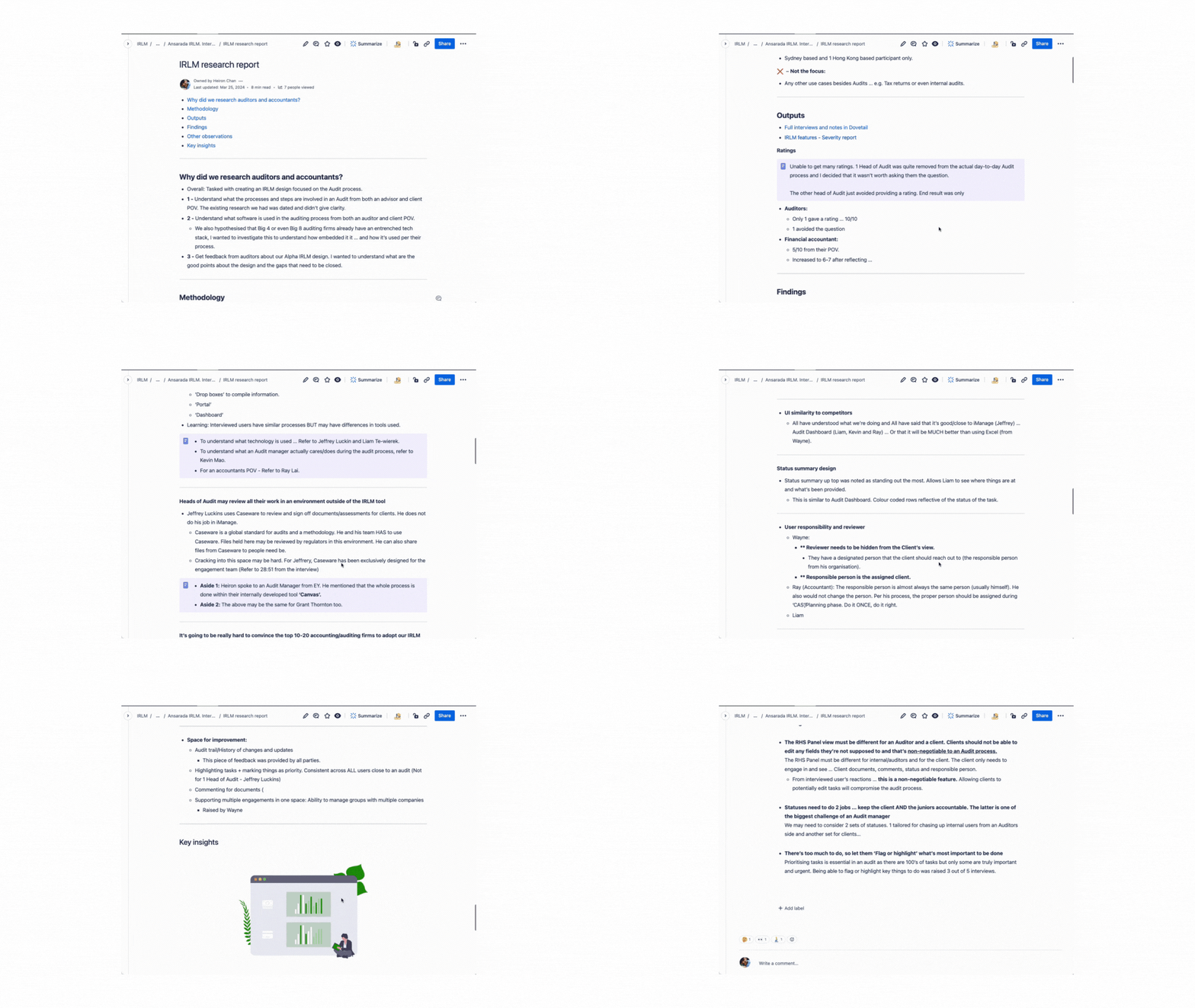
I conducted 5 user validation sessions with auditors using low-to-mid fidelity designs and centralized my findings on Dovetail. From this activity, I synthesized the information and created 2 artifacts to identify key learnings and priorities.
I discovered that Information Request List tools are already in use by Tier 2 and 3 auditors which we assumed didn’t.
Secondly, the tools used are deeply embedded within their organizations; it would be near impossible to get them to change providers.
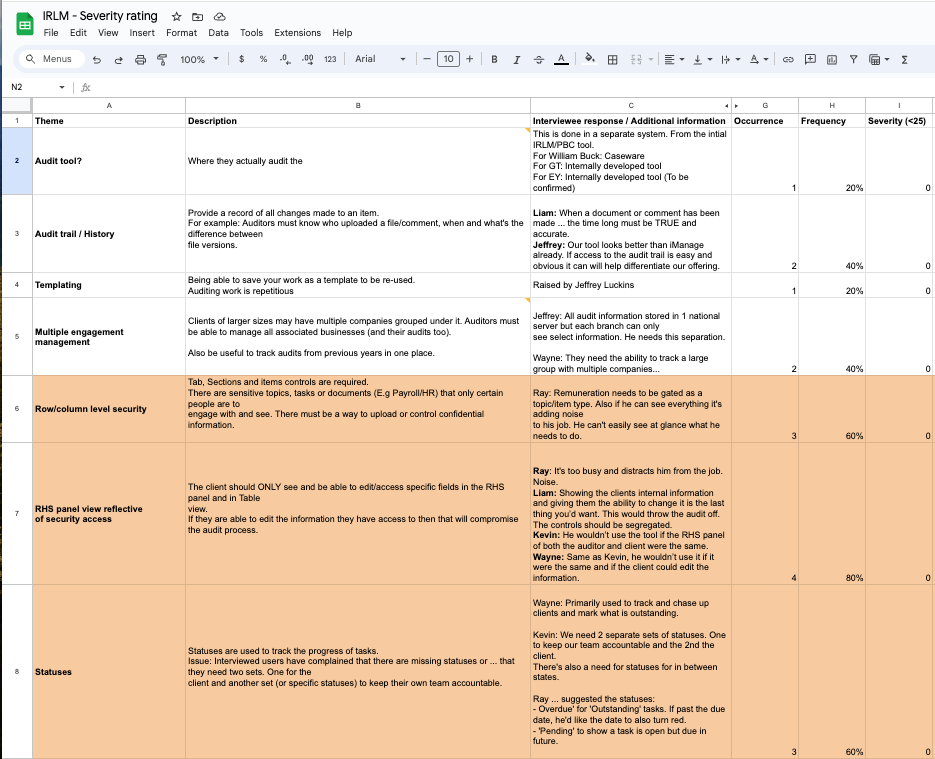
Severity report
Secondly, the research helped me generate a severity rating report to help identify the next set of priority features to build if this project were pursued regardless of learnings.
Implementation
To ensure speedy delivery and UX consistency our team and I leveraged Ansarada’s design system, basing most designs on existing design components. This is a fundamental design principle in Ansarada to prioritize consistency and convention over invention.
To ensure designs were shipped with minimal error, the product triad and I collaborated closely with relevant developers. The product manager wrote Jira tickets for the relevant user stories. I reviewed said tickets and attached designs with detailed specifications.
I would then set up a meeting with either the Front-end or Back-end developer to review the ticket and address any questions and uncertainties. We would also catch up and provide updates daily at stand up or at grooming meetings.
Key design decisions
The guiding principle in this project was to design features that can serve both an for audit and for any corporate finance use-case, like raising capital or M&A (Merger & Acquisition).
Secondly, we optimised features that could benefit our two key personas: Managers who needed a quick, high-level overview of the project and Analysts who completed and administered tasks.
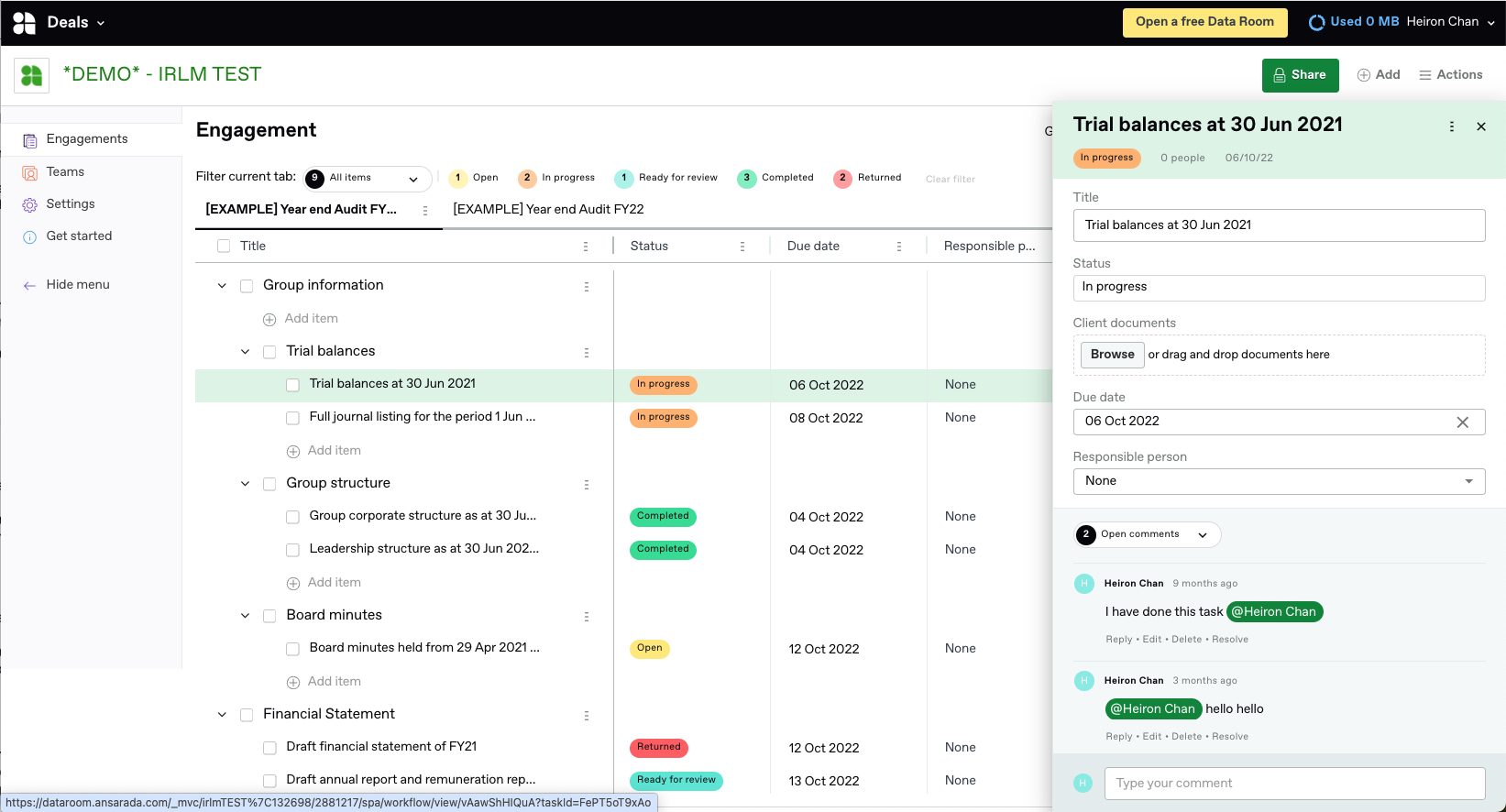
Status summary and filtering: To enable managers to be able to at a glance see the progress being made on tasks and to allow users to filter for tasks they are responsible for.
Slide-out Panel: A properties panel to match in best-in-class Workflow tools (e.g. Asana, Monday.com and Jira) for easy management of tasks, attached documents and comments.
Security: To eliminate compliance issues (Client editing information they should not) with
Setting priorities: Identifying and actioning priority tasks was the most important goal of both auditors and their client. Providing tools and ways to help each respective user achieve this was a key theme.
Reflection and learnings
This project was discontinued because our CEO decided that it wasn’t a promising enough opportunity and wanted to reallocate resources to other opportunities that could help Ansarada ride out COVID.
Nonetheless, I learned a great deal from this project about user validation and bringing people along the journey.
When there is lack of clarity in a project and increasing business risk of pursuing a low ROI opportunity, conducting user testing and validation is the highest priority action.
In this project, scheduling in early conceptual validation provided our team clarity and a reality check of what the actual market opportunity this project had. Without it, we may have wasted even more time shipping features instead of looking for other problems to tackle with better commercial value and opportunity.
Secondly, bringing stakeholders along in these validation sessions and synthesising the learnings and insights is crucial. It’s important everyone in the team is closely aligned with the customers POV and has shared understanding of the problem beyond intellectual understanding but also the emotional impact it has, if executed correctly.
Outcome
This project was discontinued because our CEO decided that it wasn’t a promising enough opportunity and reallocated resources to other projects.
Nonetheless, our short-lived efforts have still had a long lasting impact both on commercial metrics and in our design system.
The improvements to Workflow from this project were crucial to how we retained Google for a 6-figure annual subscription and other customers like Grant Thornton, AJ Gallagher and Steadfast Group for other use-cases like compliance and engagement checklists.
We delivered 3 key features and upgraded how tasks can be managed from a slide out panel component. This latter pattern is now re-used in 3 of 4 Ansarada products.
Prior to this project, I had already designed and delivered 9 features. Combined with product and go-to-market efforts our team and I steadily increased engagement with Workflow in new data rooms from only 1.1% in Jan 2022 to 7.7% in Feb 2023.