Retaining Google for a 6-figure subscription renewal
Overview
Duration of project: May 2024 - Present
Role: Product designer
Team: Functional team comprised of Tech lead, Product Manager, Myself and back-end and front-end engineers.
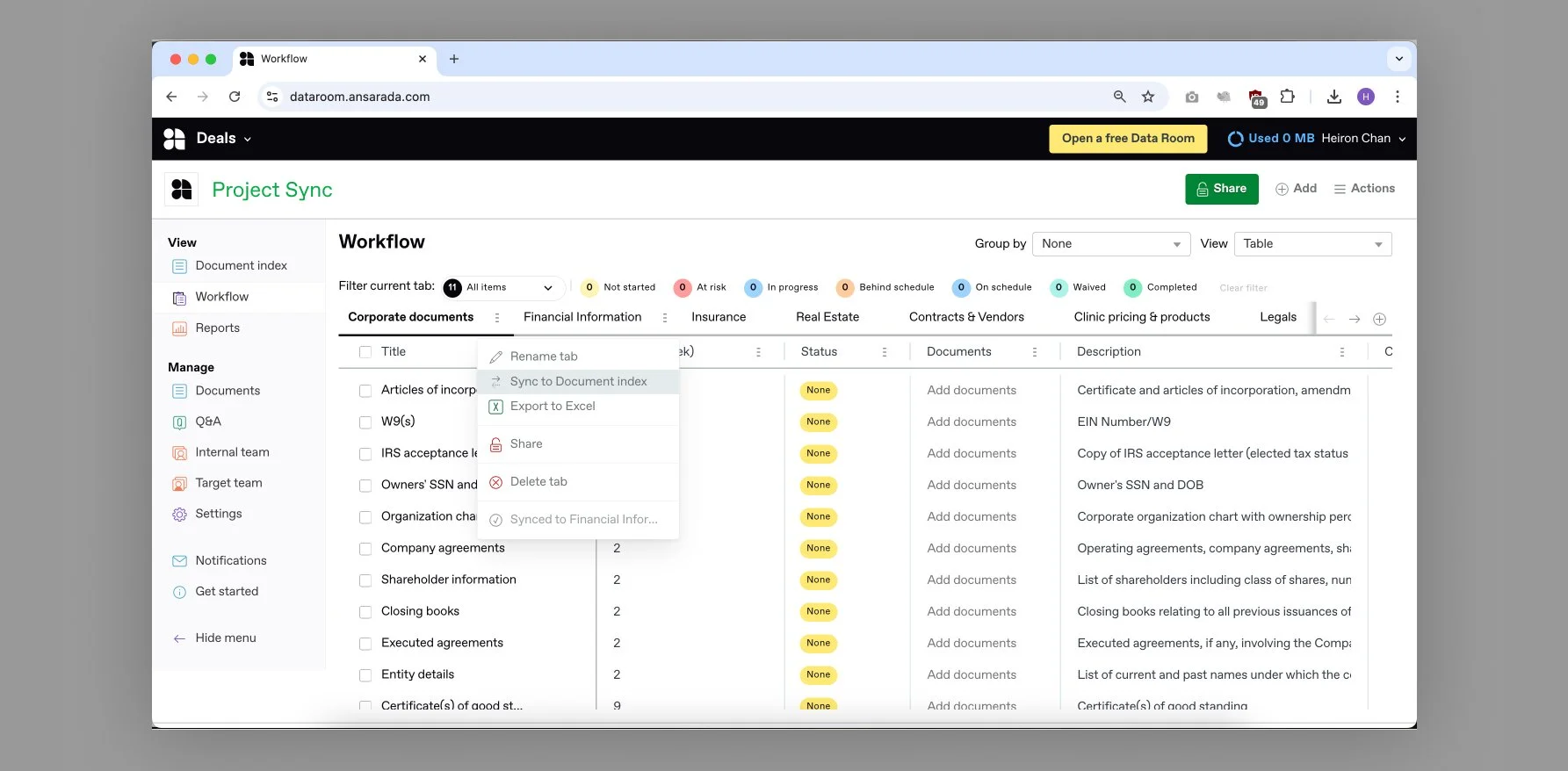
Ansarada launched this project to secure Google’s 6-figure renewal in 2024 and to address all of Google’s unresolved pain points using Workflow for targeted acquisitions.
I am leading the end-to-end design effort, starting from discovery research through concept design to final delivery.
Furthermore, our team and I intend to scale these improvements beyond Google.
Currently, freemium users selecting the Targeted Acquisition are churning before they activate the data room. We intend to reverse this trend by adjusting the features developed for Google so that it can be broadly released to all customers.
Problem
In a targeted acquisition, an acquiring company (buyer) conducts due diligence to assess the worth and potential return-on-investment (ROI) of a target company (seller) to acquire.
In mid-2022, a series of design improvements begun in response to Google’s interest in using Workflow for the Request For Information (RFI) process in targeted acquisitions.
By early 2023, our team had delivered a custom version of Workflow that had ‘just enough’ to facilitate the RFI process and was the value proposition that retained Google for 2022-2023.
However, after delivery - all resources from design, engineering and product in Ansarada were redirected to Governance, Risk and Compliance (GRC) products for over a year. As a result, no improvements were made to the MVP, leaving Google stuck with multiple unresolved pain points and uncertainty around their 2024 renewal.
My challenge here is 3 fold:
Priority 1
My top priority is to deliver designs that can address Google’s biggest pain points with double information handling and management. Our team and I have to ensure we secure their 2024 renewal.
Priority 2
The second priority is system model fit. Close collaboration with Product and Engineering is essential because designs need to be delivered on a tight timeline and feasible with Ansarada’s legacy system.
Priority 3
The last challenge is that each feature must also be able to deliver value to customers beyond Google.
Outcome
This project is in delivery and our design proposal has successful retained Google for another 6-figure renewal this year.
The design proposal and upcoming 2024-25 improvements will address 90% of Google’s pain points and reduce ~80% of their previous friction with set up.
End-in-mind design (2-way sync and other features) were also scoped and explored from the interaction design.
To achieve the secondary goal of this project and reverse the negative selection to activation rate of the targeted acquisition use case, our team and I are sequencing the design upgrades to also improve the engagement of other Workflow users beyond Google.
As this project is happening in real-time, metrics and results this secondary goal are not available until later.
Research
Discovery research
As our team and I needed to respond to Google as soon as possible, we set up a discovery call to flesh out their business goals and address their largest pain points with Workflow. We identified 13 total pain points, varying from minor frustrations to process blockers.
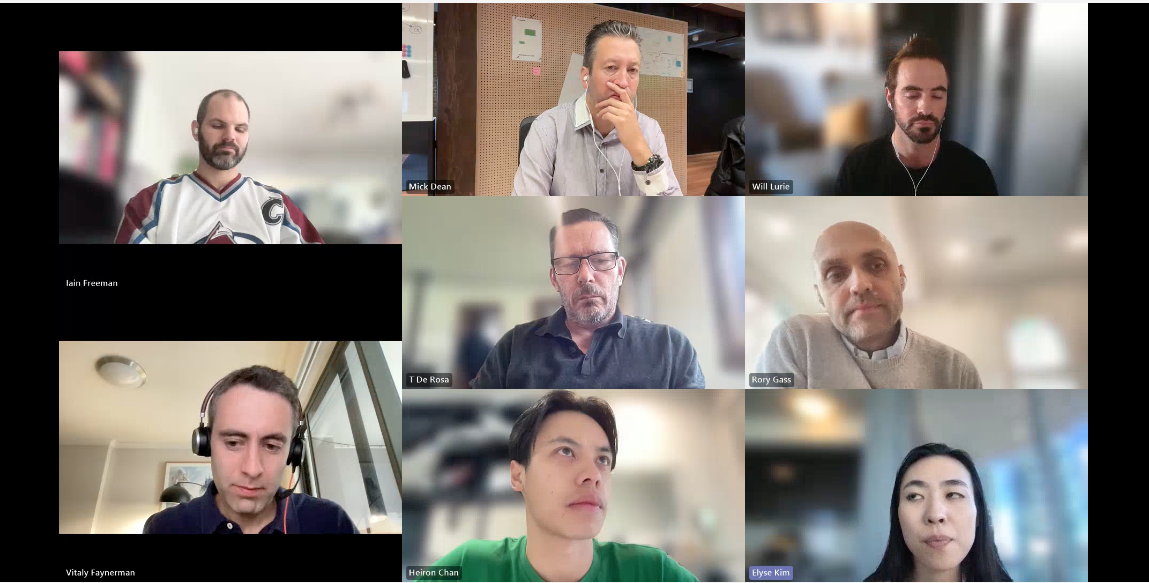
To create shared understanding around Google’s pains and to identify where the gaps are in our system, I created a system map to identify all the issues experienced by Google from start to finish in their targeted acquisition process.
This was an important artefact to illustrate where our system issues were and how it impacted Google’s process.
I calculated that it took Google up to ~317 actions and clicks to just set up their RFI in our system. In the second half of their RFI, 7 other pain points cause further friction. Overall, the UX of Workflow needed to be urgently and systematically improved to secure Google’s renewal.
Desk research
I reviewed competitor products for solutions and approaches to the problems we faced - however almost all competitor products in the Targeted Acquisition space are not free-to-trial or freemium. As a result, I bypassed this by using their online help guides to understand how these products worked.
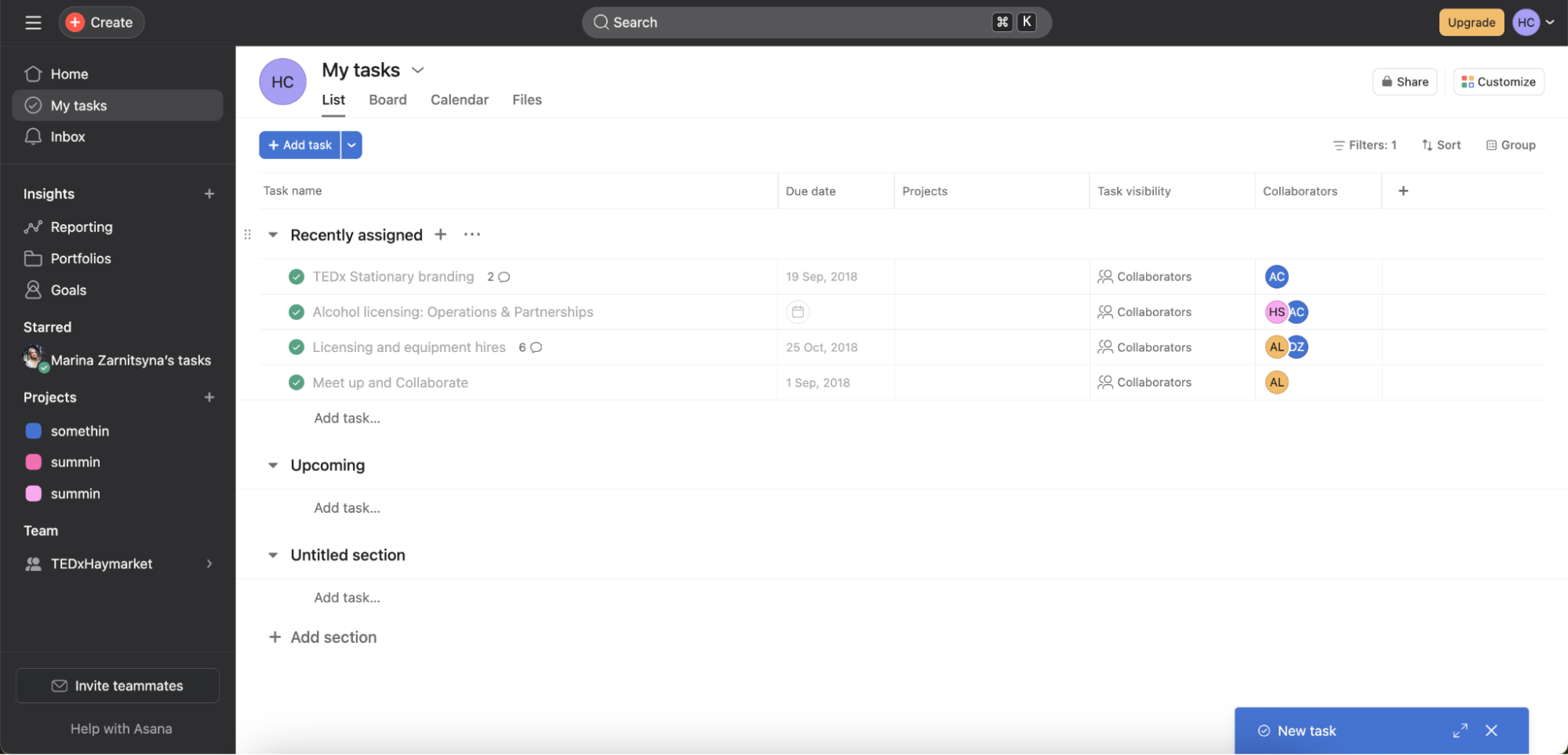
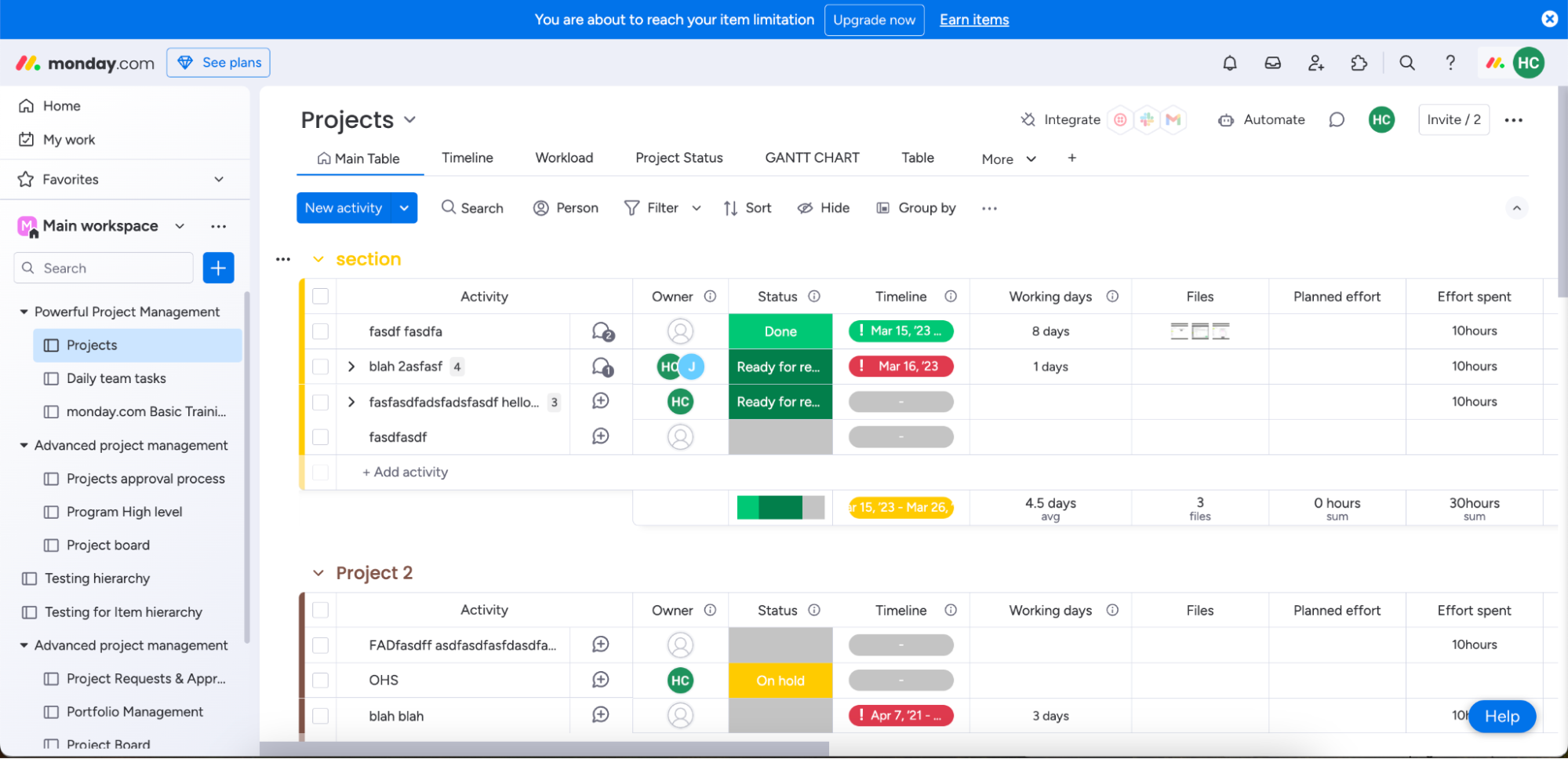
In parallel, I reviewed best-in-class task management tools to assess how certain column types and features needed to work. For example, the display of the
I leaned into these products on an ad-hoc basis as they are not a 1:1 fit with the use-case and persona Workflow is optimised for.
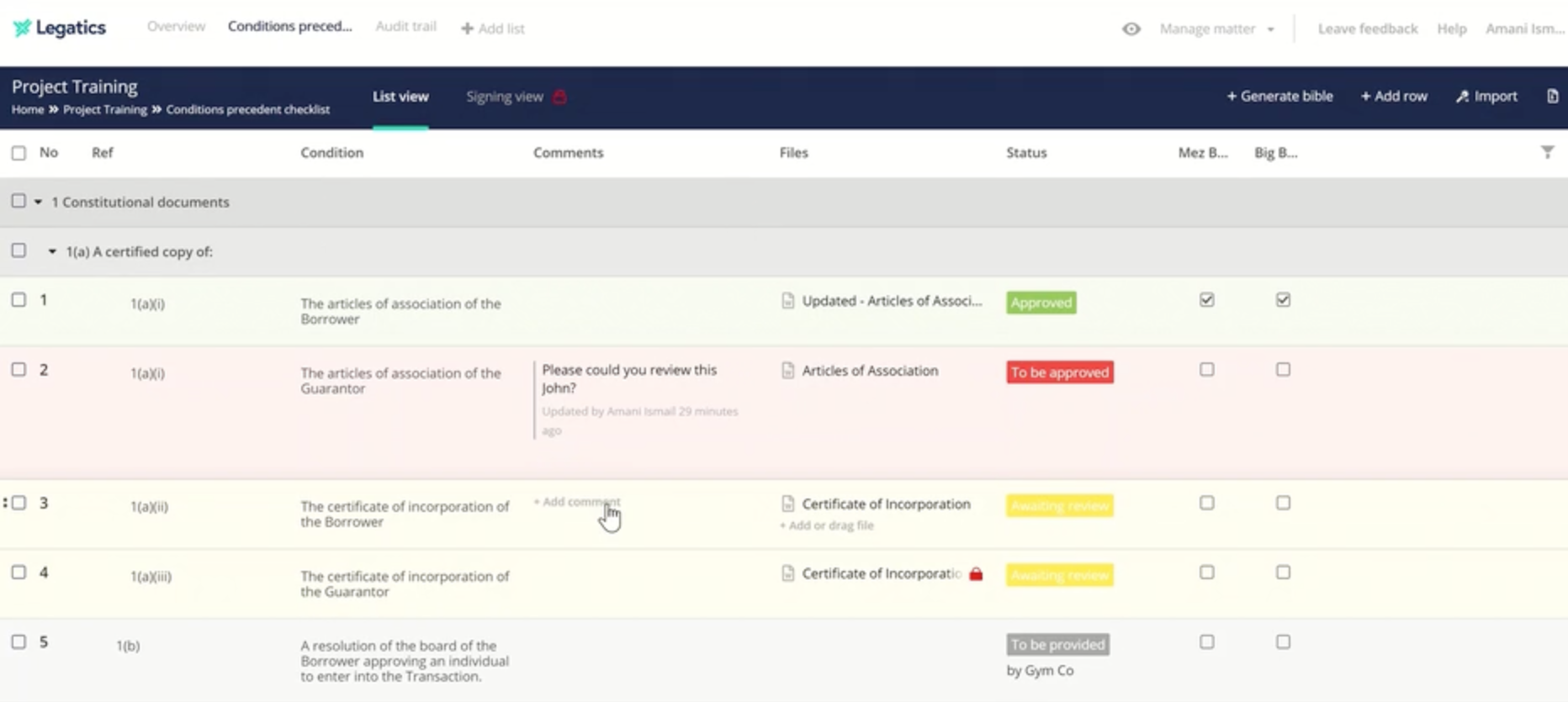
Legatics for Commenting
Monday and Asana for Task management
Design
Initial Low-Fidelity concept design
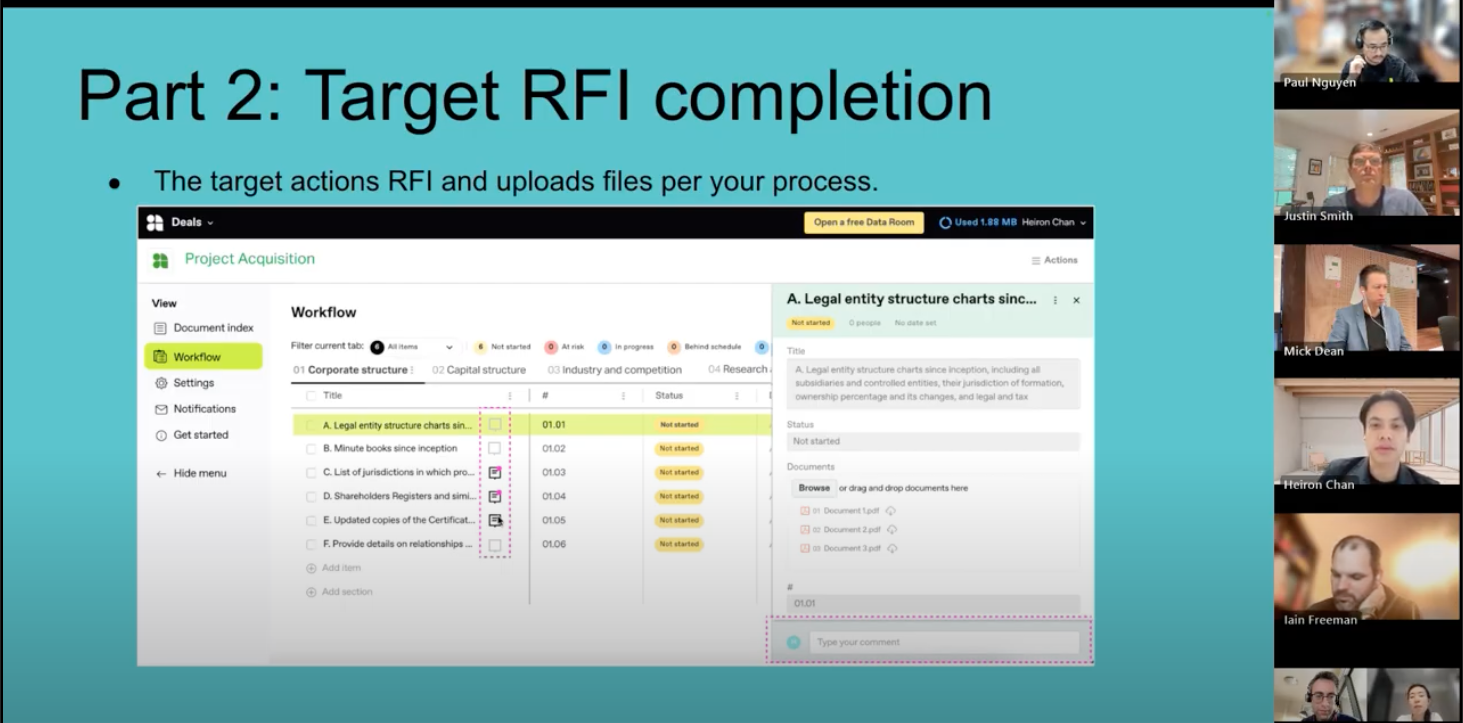
Based on the PRD and the pain points identified from our discovery calls, I created low-fidelity wireframes of our concept design to foster a relationship with Google, showing our progress and our commitment to fixing the problems they had.
Secondly, we used these concept designs to gather crucial feedback for the designs with both Google and internal stakeholders who had experience in Targeted Acquisitions (e.g. our CFO).
Further validation with Google and other customers
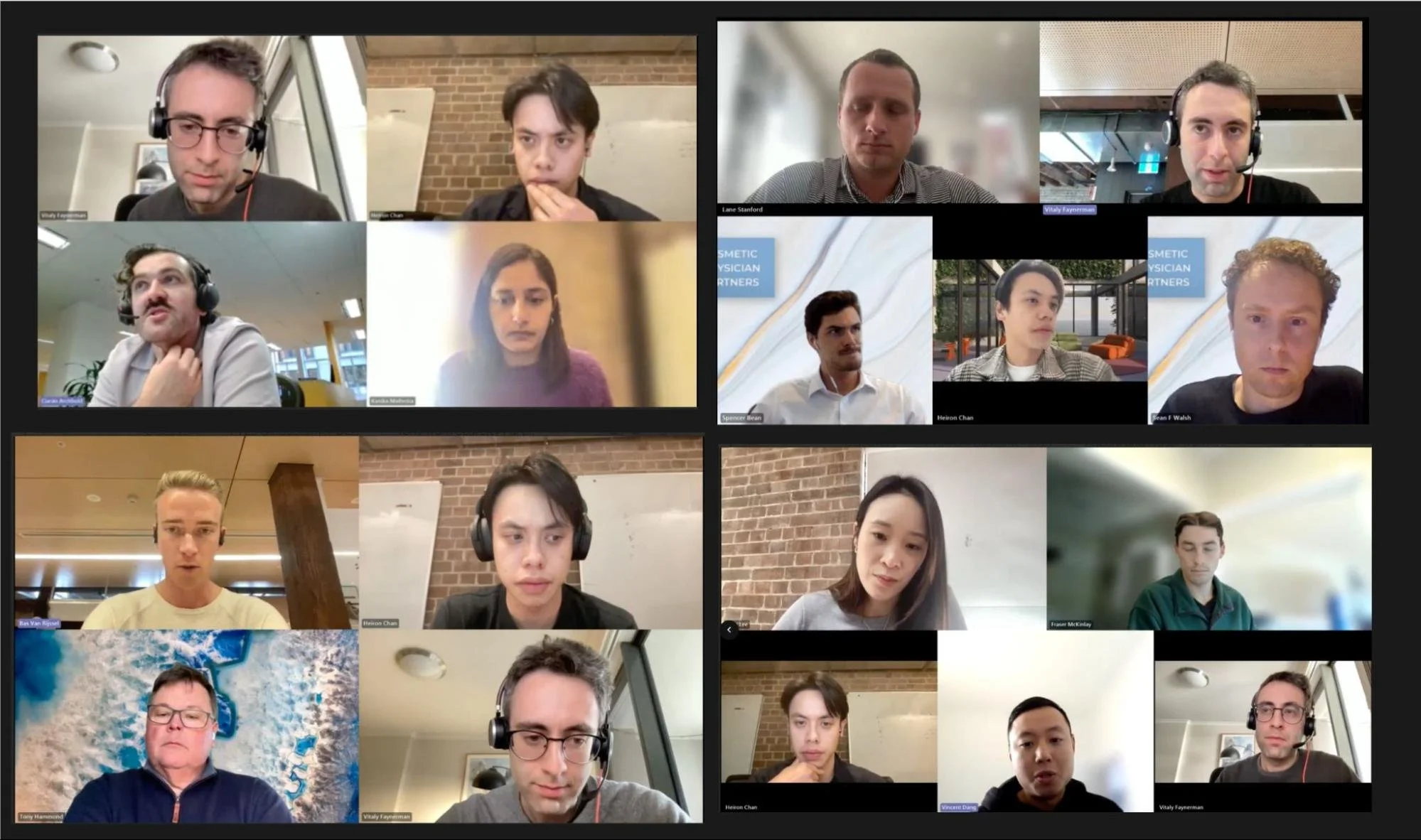
From 2022 to 2024, 5 design reviews were conducted with Google.
For this recent renewal in 2024, 2 of the total 5 were conducted. Our team and I designed and scoped out the improved solution, as fast as possible to meet this upcoming renewal deadline for Google.
To achieve the secondary goal of this project, to scale the improvement to other Ansarada customers, our team and I also validated the design with 5 other customers. These customers have not used the custom version of Workflow Google has access to.
The goal of these sessions was to ensure we did our due diligence in validating our product beyond Google and to nurture new customers who could trial the new and improved version of Workflow for targeted acquisitions.
In the lead up to every interview I worked closely with the Product Manager and Tech lead to ensure alignment on the feasibility of design.
Survey in lead up to second design review with Google
Our team and I had several uncertainties about Google’s document review process and how they communicated with their Target in the RFI process. To address this, the product manager and I created a short survey to close these gaps. We wanted to get clarity on these topics before going back with updates.
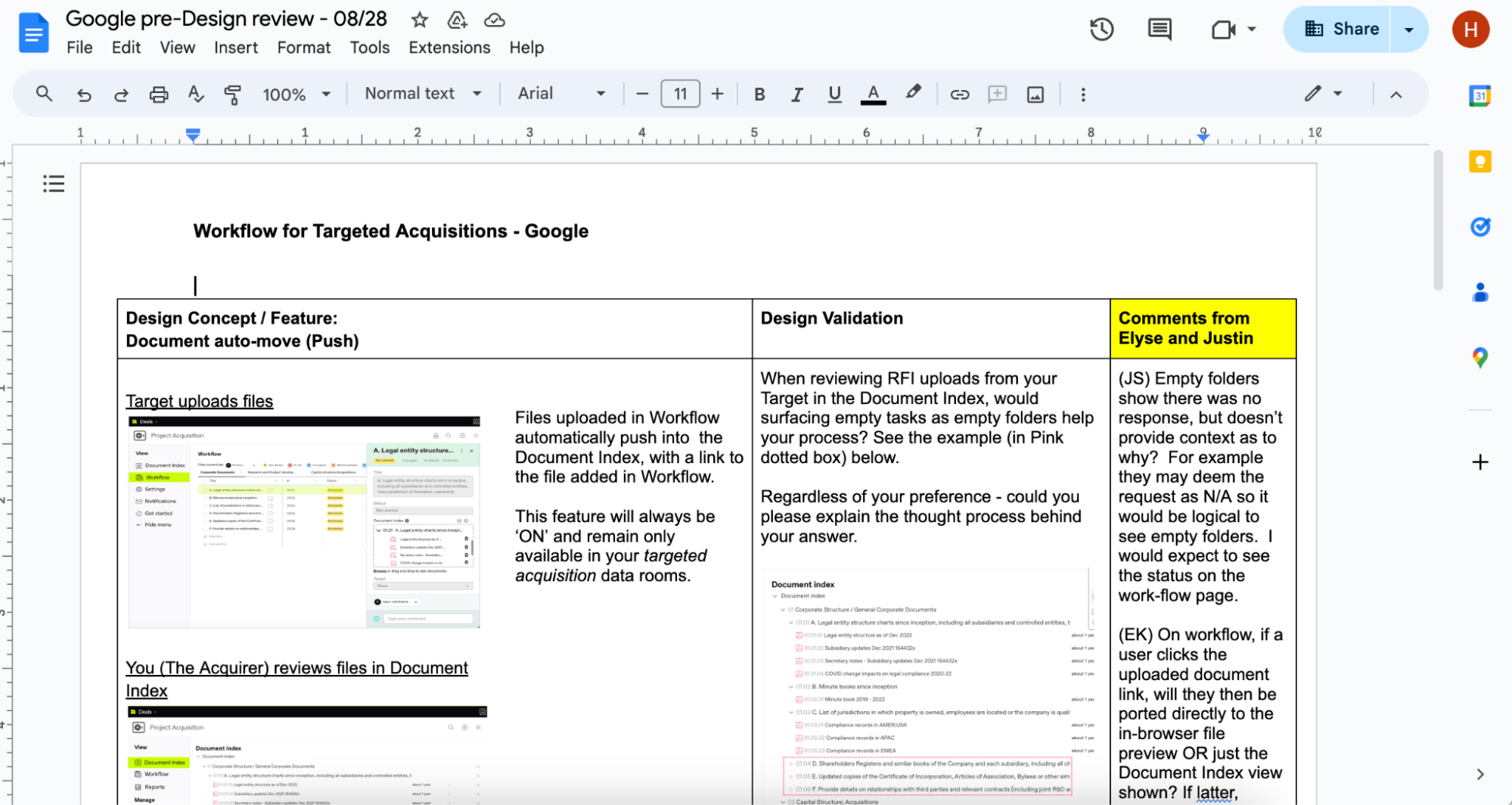
Second design review and update with Google
The focus of this session was to validate the refinements made to the design around the security model, communication and how documents are moved.
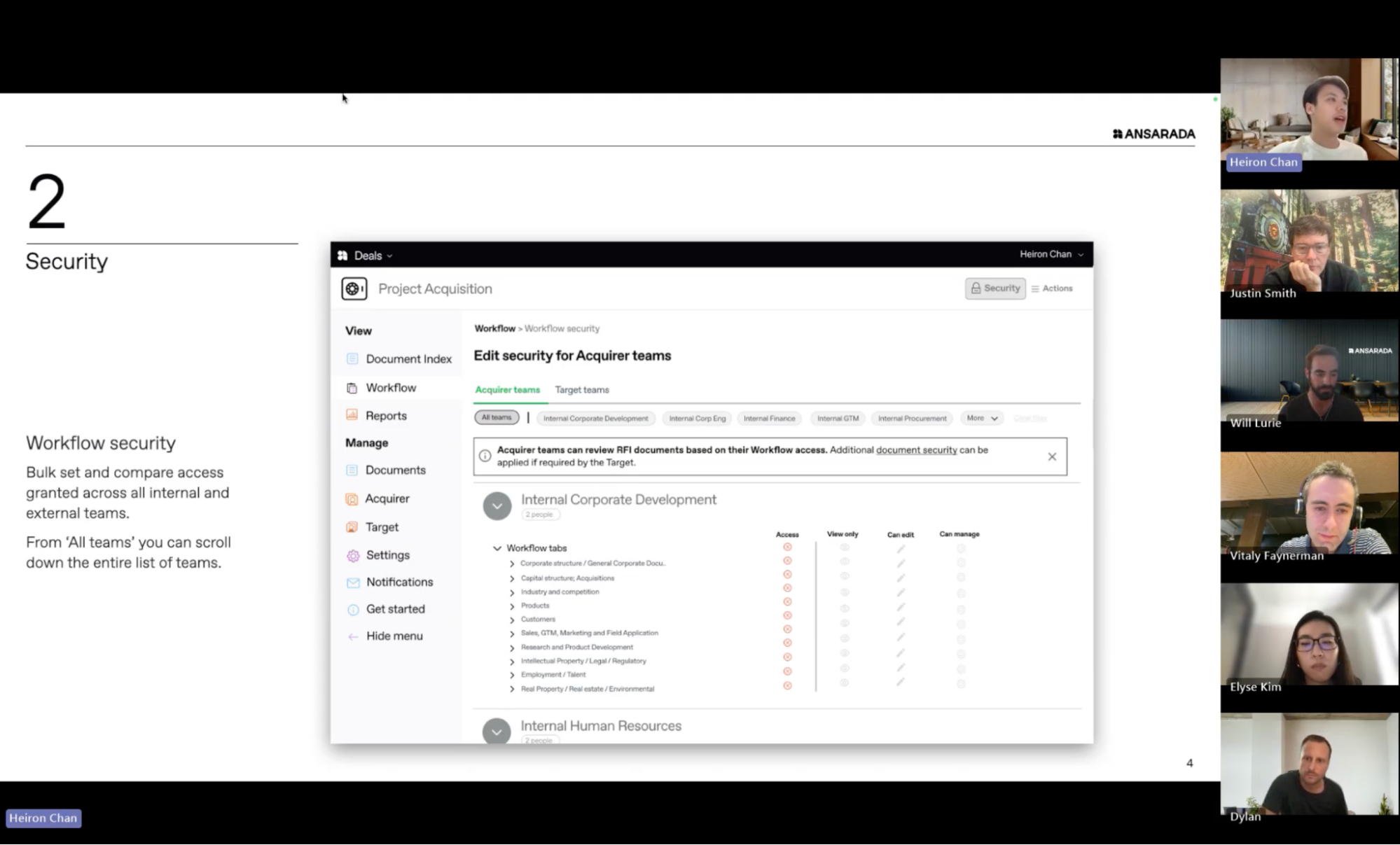
Key Design Decisions
The guiding principle of this project was to eliminate the pains and frictions of set up of Workflow for targeted acquisitions. This area is where we decided we could make the most impact in resolving Google’s pain points and in improving the activation rate of this use-case.
1-way automatic move of documents: Currently an entirely manual process, this feature improvement that will eliminate 17% of the previous clicks to set up Workflow and improve the initial set up.
Simplified security: Currently the security between Workflow and the Document index is not integrated and requires manual reconciliation. By simplifying and integrating security of Workflow with Document index, a further ~60% of the Google’s previous friction with set up will be eliminated.
Smarter and visible comments: Comments is the lowest utilised feature in Workflow because of it’s lack of visibility and customer awareness. The upcoming design upgrade will enable comments to become convenient and usable at a glance from Table view in Workflow.
Delivery
2022-2023 MVP
During the delivery of the MVP back in 2022, our team and I leveraged the existing design system to ensure consistency of experience and speed of delivery. To ensure the designs were delivered into production accurately, I collaborated closely with engineers on Jira tickets and reviewed their work in Dev environments.
When I saw inconsistencies or areas for improvement I collated my observations and comments, logging them on Confluence where all stakeholders could easily discuss and review tasks. When necessary I also updated Jira tickets with additional comments and designs.
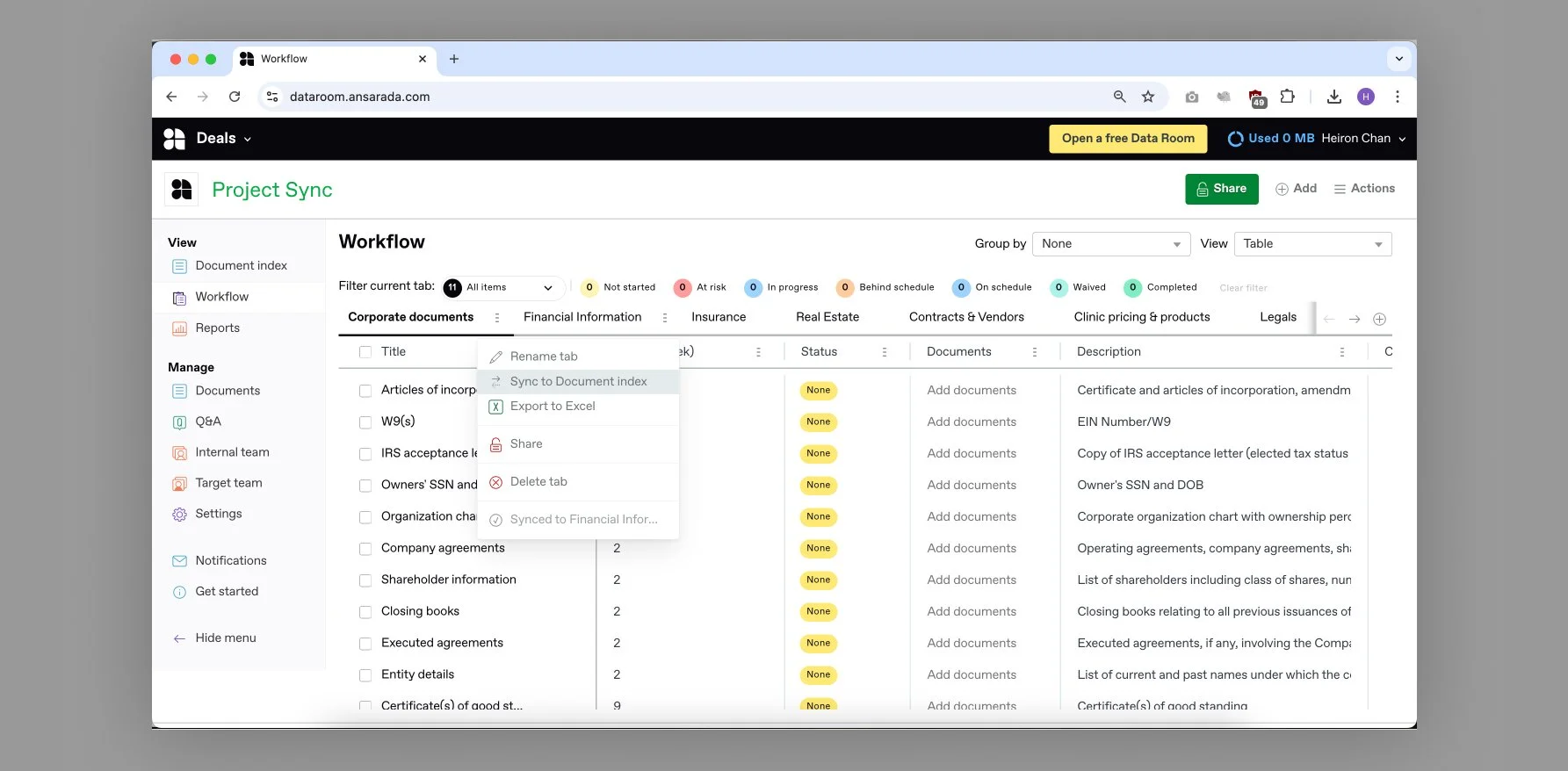
2024 Improvements
As of now, we are beginning the delivery of the upgraded design, starting with improved notifications and then improvements to the UI with text wrapping and surfacing of comments.
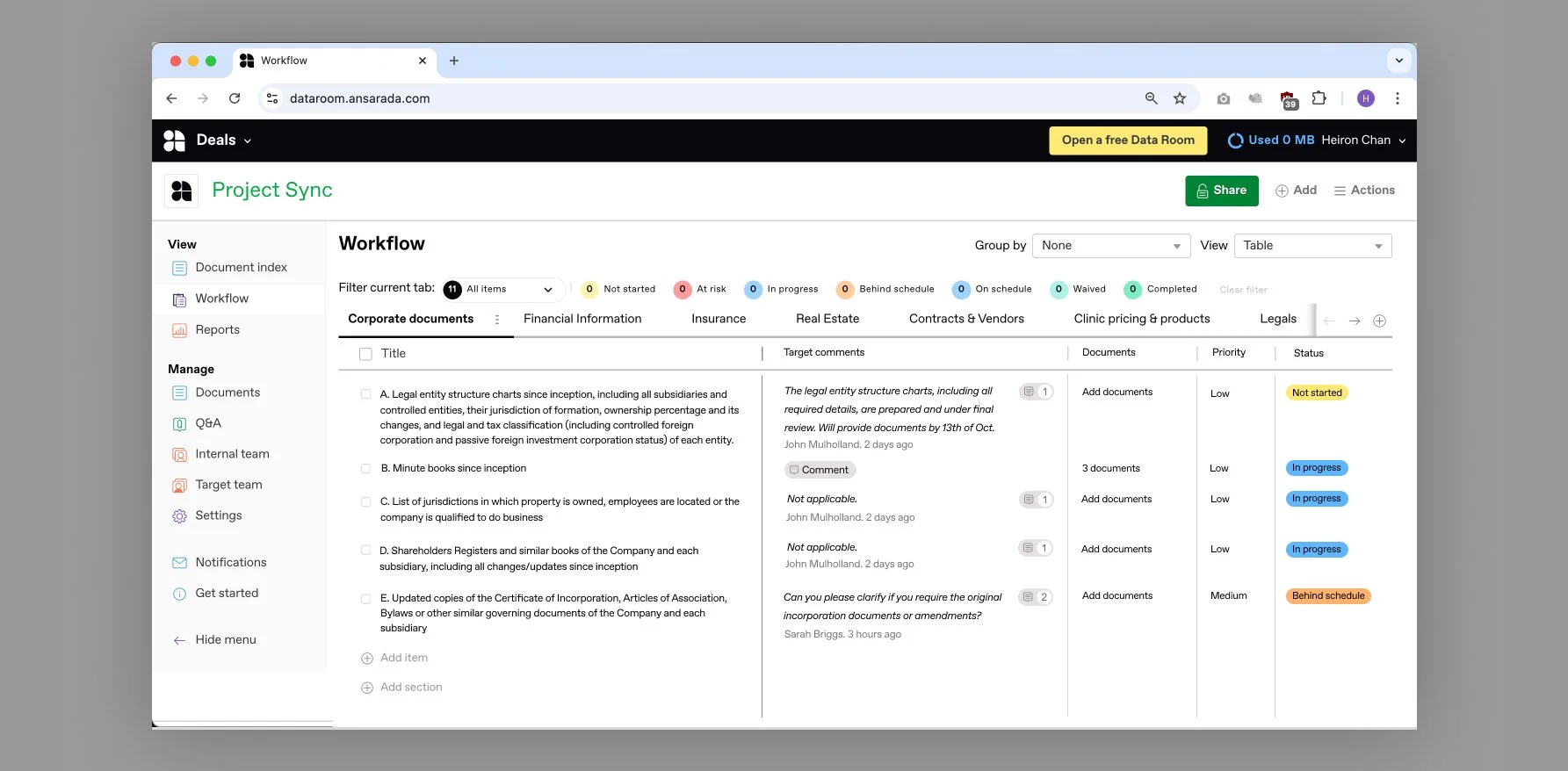
Reflection and learnings
Reflecting on this project, I learned the importance of fleshing out customer pains and the value of rapid, iterative development to build customer relationships.
Customer interviews can be used as a tool for retaining customers, as much as it is valuable for product validation and refinement.
A major shortcoming of this project t is that the initial development of Workflow for buy-side deals was driven by one high-profile customer and our team’s knowledge on RFI’s from an adjacent use-case, audits.
If I were tasked with a similar challenge again, with limited time and resourcing constraints, it would be my highest priority to facilitate a design workshop to identify key outcomes, risks and uncertainties with the project.
My goal would be to create shared understanding and clarity so that our team could align a common purpose and key actions we’d have to take to ensure longevity of our solution and to illustrate the risks of not continuing to iterate on our MVP.