
Global people and teams management
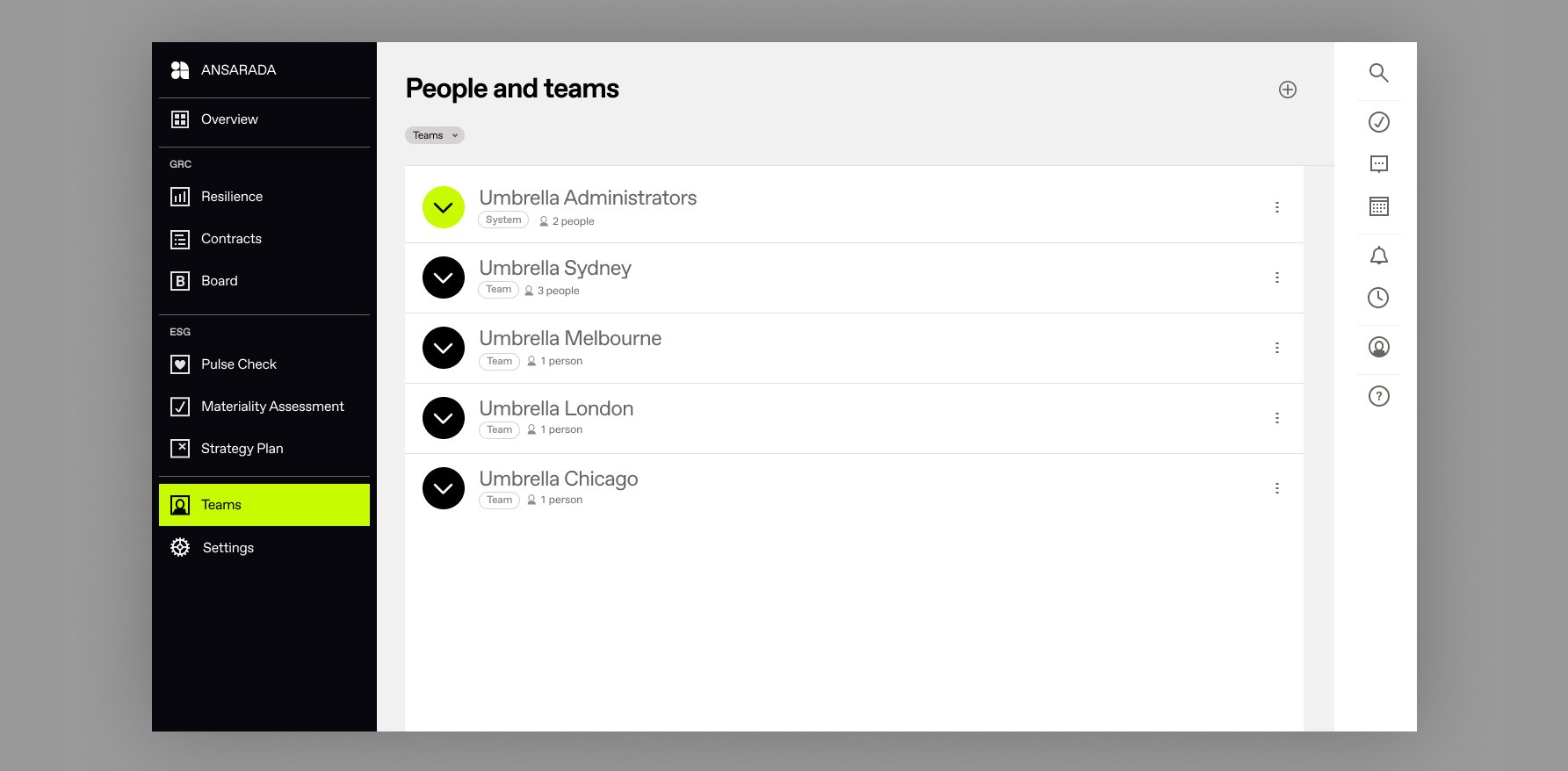
Overview
I led the design effort to create a centralized location for managing people and teams across Ansarada's Environmental Social Governance Risk & Compliance (ESGRC) product suite.
This suite includes three products, each with its own people and team management system.
My design consolidated these disparate systems into a single, scalable user management solution that can support both legacy and newly developed products.
The primary business goals in this project was to build the foundations for product cross-sell and eliminate technical debt by replacing multiple people and team databases with a unified system.
Problem
Managing multiple products with distinct user and team management systems is complex but essential for scalability and user experience.
Unlike established solutions from Atlassian, Google, and Microsoft, I needed to deliver a solution for Ansarada that could scale and serve upcoming products while accommodating legacy technology.
Because of this project's importance in driving product cross-sell and reducing technical debt, there was strong urgency to rapidly build this improved people and teams management system.
However, there was little to no senior stakeholder agreement on the prioritisation among the 3 products. This problem was further exacerbated as 2 of the 3 products were newly developed and evolving at a rapid speed, making design requirements unclear.
Furthermore, at project kick off the design scope required that the solution had to support the data room. However this was later dropped when it was announced Ansarada was getting acquired in February, 2024.
*Include point: Including the data room meant we had to create a new dash and home screen. Also we had to think of how we could connect products that didn’t relate to each other (ESGRC and the DR).
Although this wasn’t the most technically difficult project, the lack of clear project requirements, business objectives and changing business dynamics made this project challenging and drawn-out.
Outcome and impact
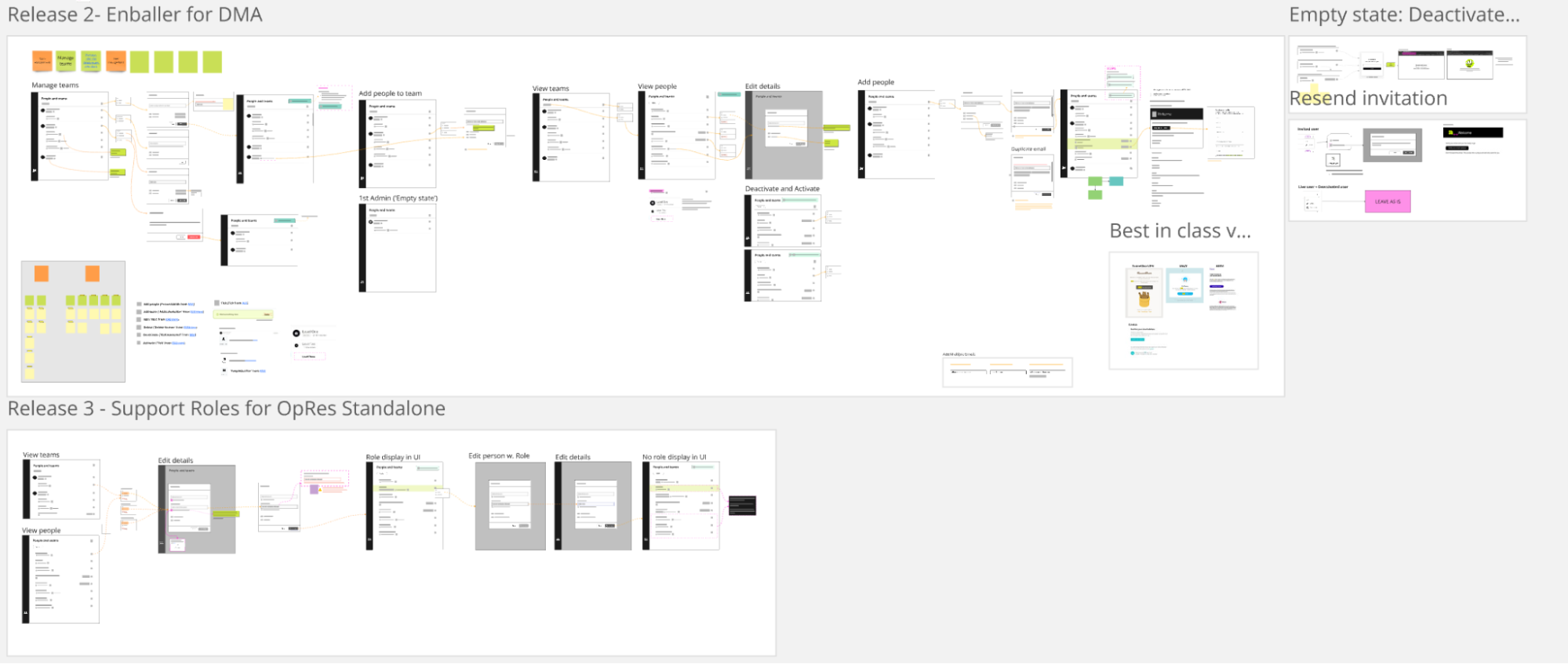
Our team and I successfully delivered designs for 3 releases of this feature.
By the third release, the people and teams system could support both the core ESG product, Double Materiality Assessment (DMA) and the latest GRC product, Operational Resilience (OpRes).
Usage metrics are not available as the DMA product was still in pilot during Release 2 (May) and I had already left this project. By the time of Release 3, in July I had transitioned back into the data room product because of the then acquisition of Ansarada by Datasite.
Design
Research
To understand the problem space and identify best practices, I conducted extensive research and created several artefacts to create a shared understanding of the problem we were trying to solve.
Competitor analysis and research
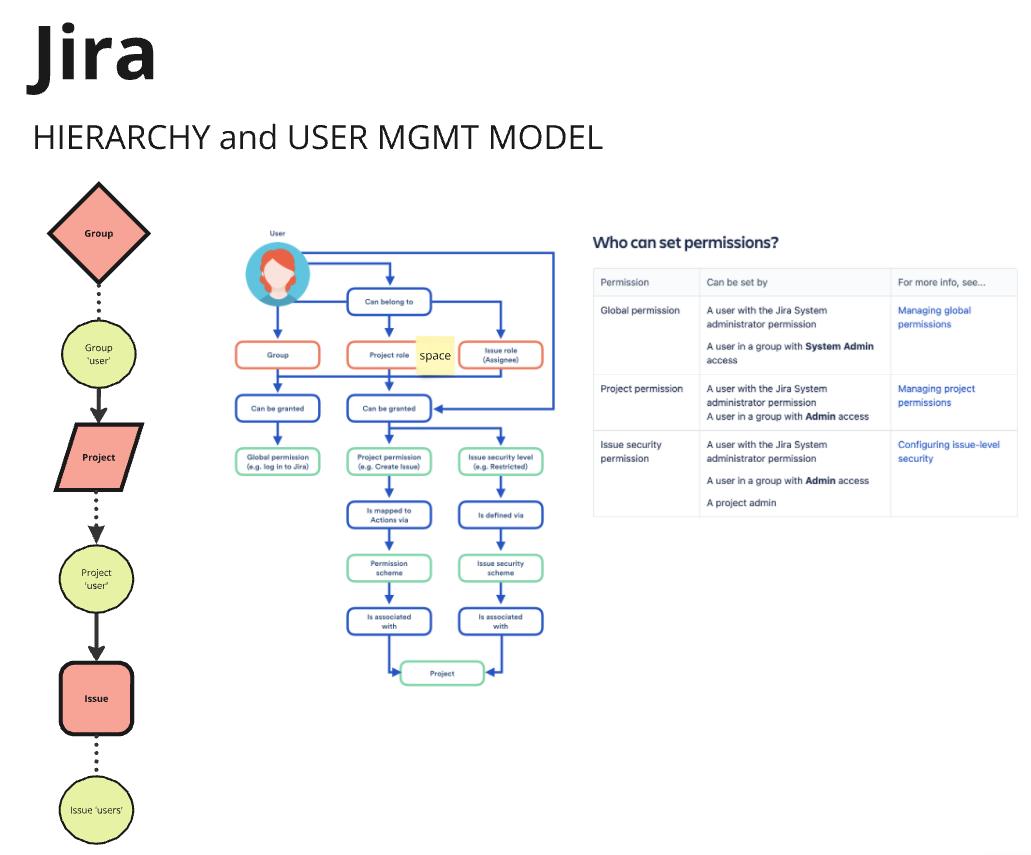
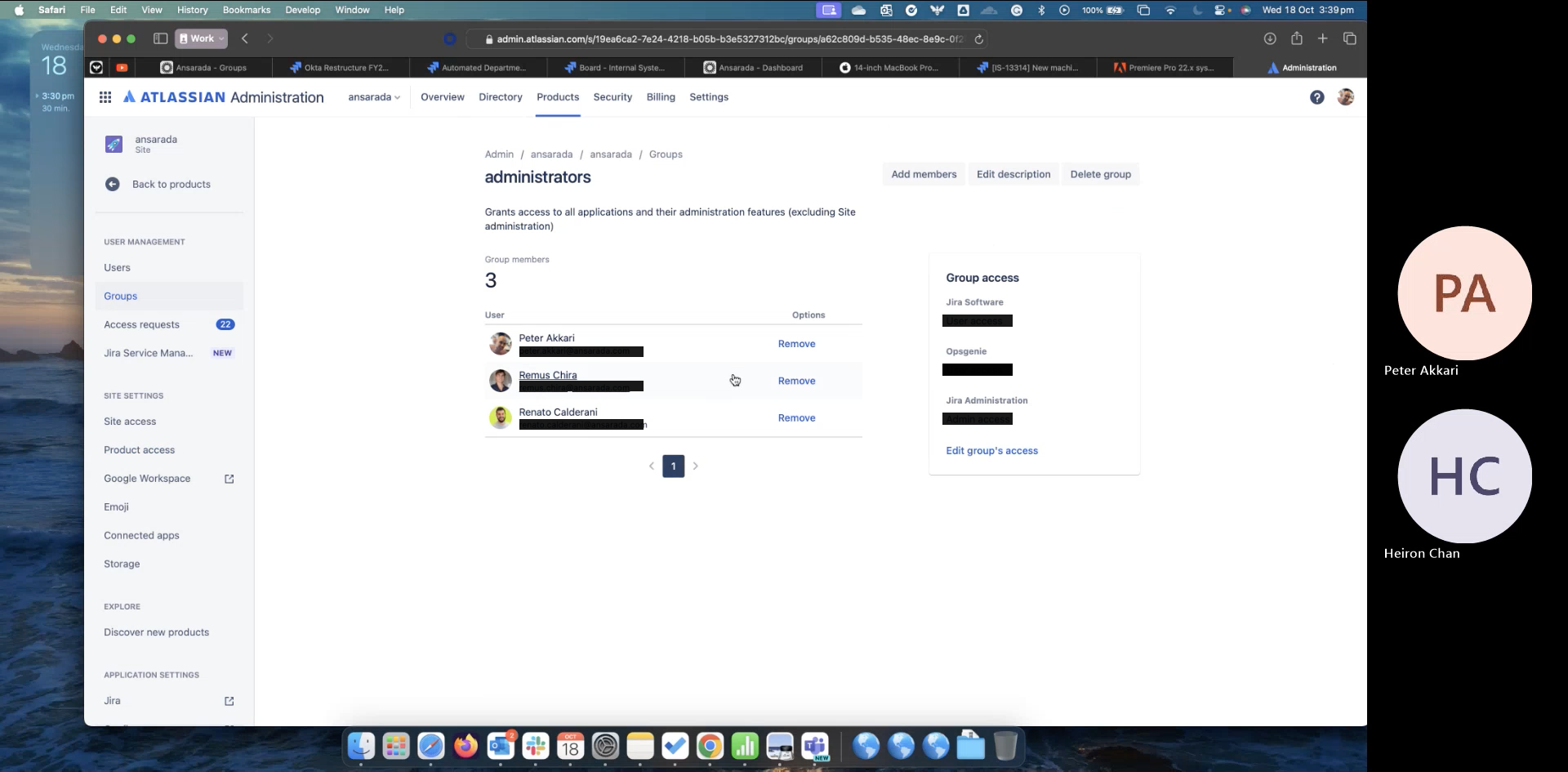
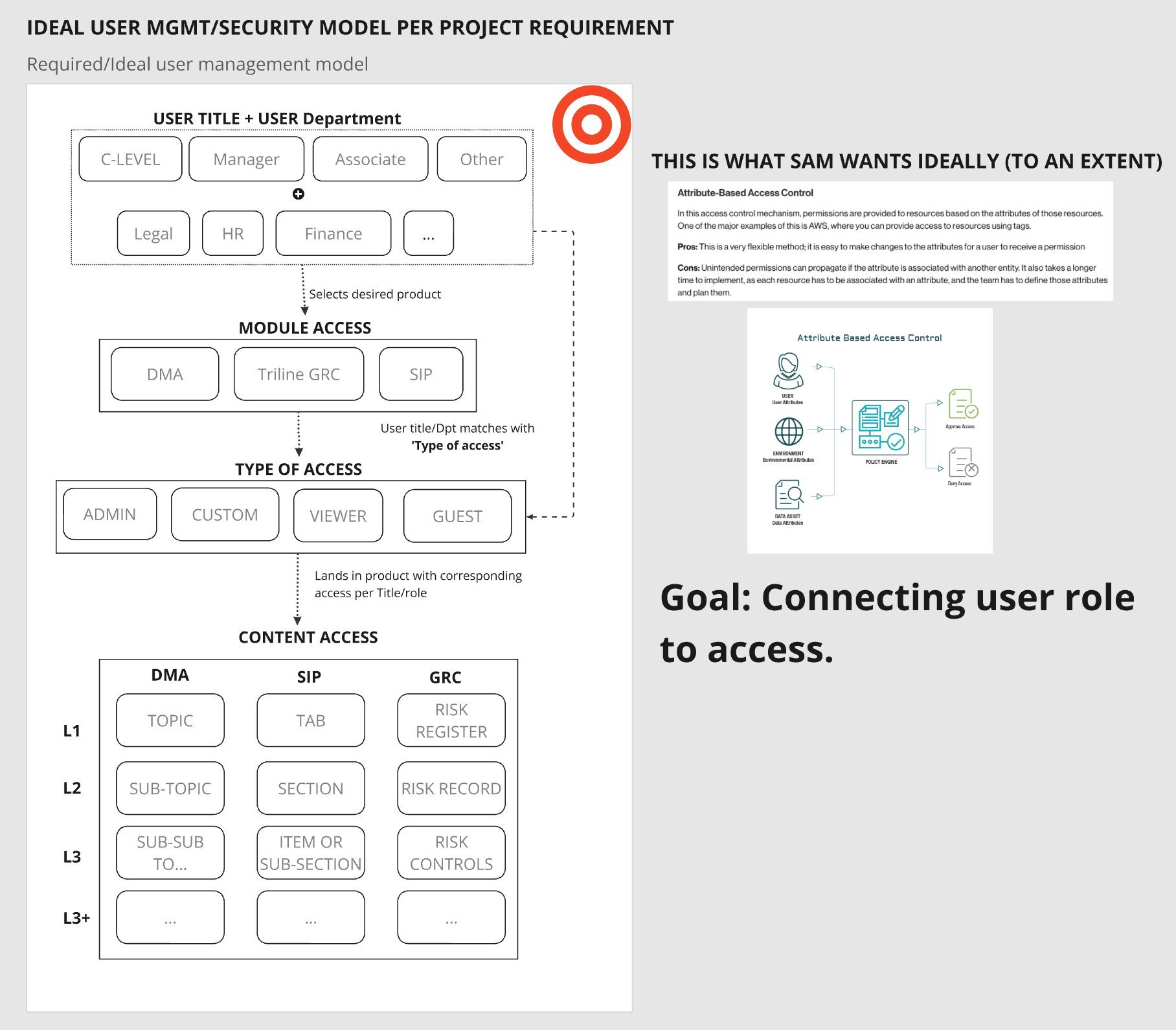
I studied user management models and systems from Atlassian/Jira/Confluence, Crowdstrike and BambooHR where security is of highest importance. I then created system models of these best-in-class products to understand how permissions were managed and distributed to large amounts of people and teams in these products.
Primary Research:
I conducted stakeholder interviews and observed how our internal support lead and HR manager managed people and teams across our 200 people organisation. The focus was on understanding how people managed access to software that related to sensitive information.
Secondary Research
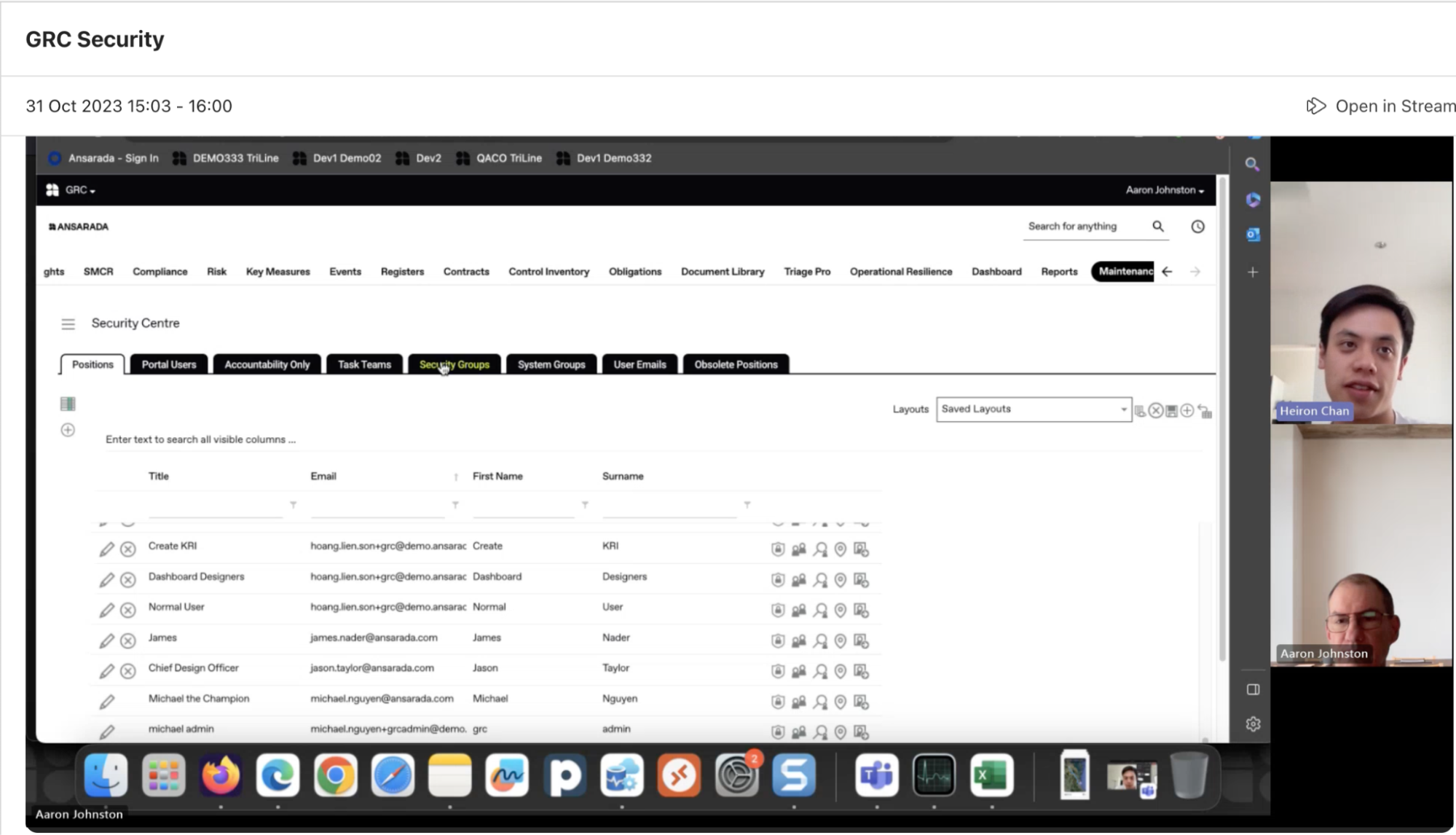
I reviewed internal training manuals and scheduled a training session with Triline’s most tenured customer manager to understand how security works in the legacy system.
This session was crucial as it helped me understand the limitations of the system and what constraints I had to work with for the design solution.
System modelling and low-fidelity design
Based on my research, I then created low-fidelity user and team management models to facilitate discussion on our high level approach and align on the constraints we had to work with.
Iteration and Feedback
Through multiple iterations, we refined the design based on feedback from stakeholders and usability testing sessions.
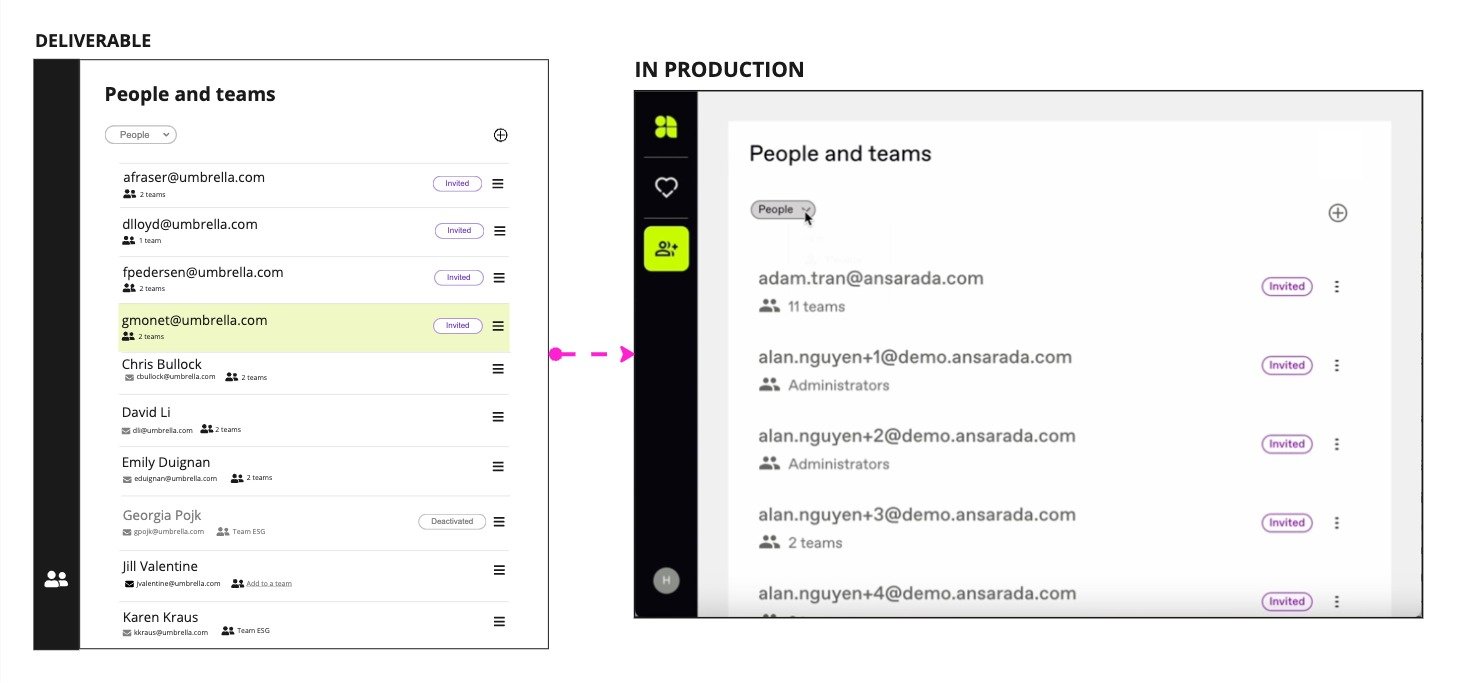
The solution was released in 3 phases. The below are the final design deliverables for Release 2 and 3.
Key design decisions
Our guiding principle was to establish foundations for modularization and product cross-sell, ensuring customers could selectively choose the modules they wanted to use.
Additionally, we prioritized enabling customers to set up teams and manage users in a single, centralized location.
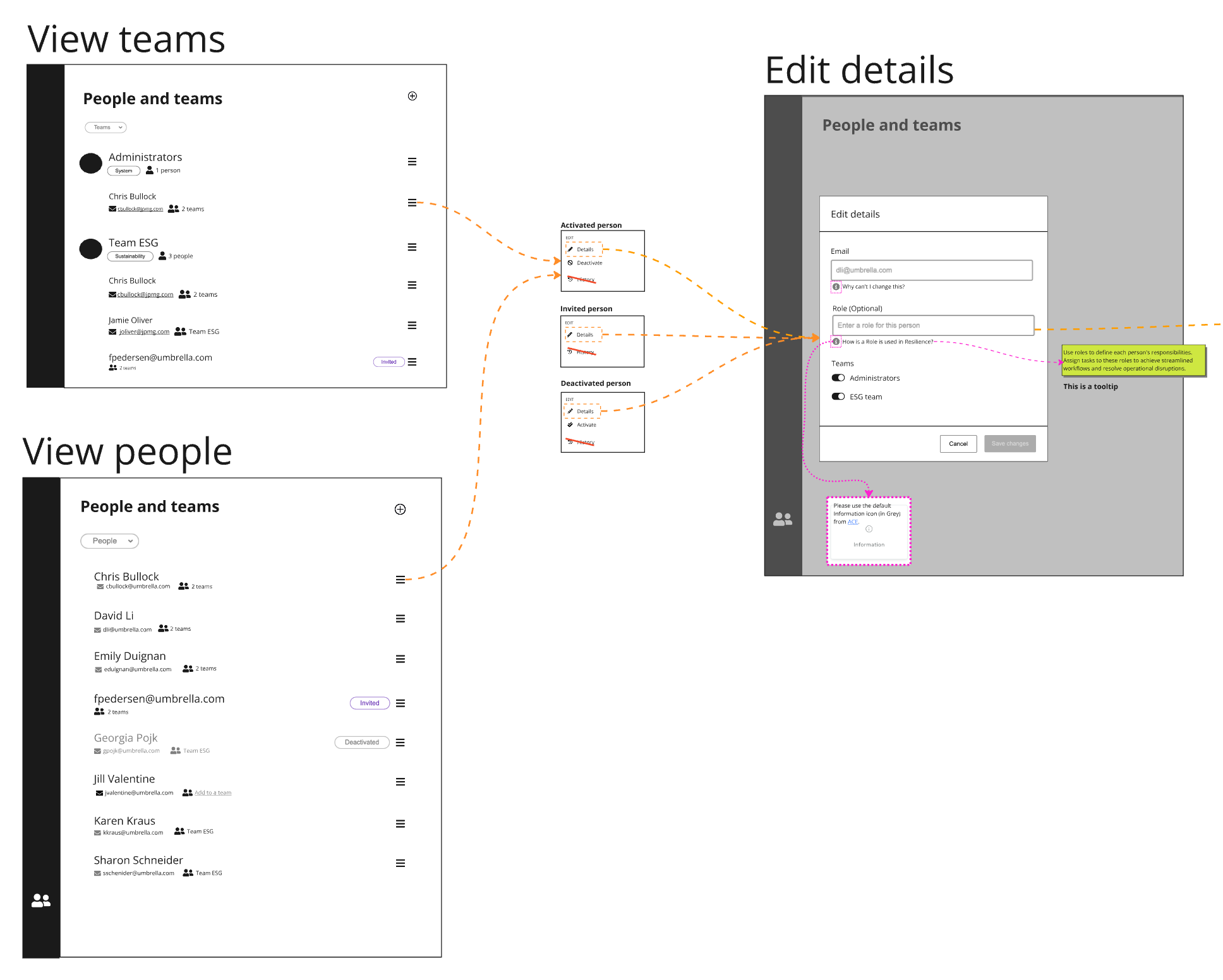
Role-Based Access Control: We introduced the concept of a "Role" to ensure the system could support both legacy and new products while maintaining backward compatibility with TrilineGRC.
Teams vs. Security Groups: To reduce complexity and improve usability, we replaced "Security Groups" with "Teams." This change allowed users to belong to multiple teams instead of being limited to a single security group, significantly reducing the administrative workload for setting up complex access rights.
People and Teams Filter: Since our priority products targeted SMEs, typically involving 6–15 users on the platform, we designed a view switcher to help administrators easily manage their organization’s scale.
The final deliverable was not required to be delivered in high fidelity because the focus was on efficiency and reuse of existing components for the display of the list of people and teams.
Implementation
Our team and I leveraged the existing design system to ensure consistency and speed of delivery. To ensure the designs were delivered into production accurately, I collaborated closely with engineers on Jira tickets and frequently reviewed their work in Dev environments.
When I saw inconsistencies or areas for improvement I collated my observations and comments, logging them on Confluence where all stakeholders could easily track and tick off tasks. Where necessary I also updated Jira tickets with comments and designs.
Reflection and Learnings
This project taught me the importance of clear communication, stakeholder alignment, and adaptability in a rapidly evolving environment.
When project goals and requirements lack clarity, it’s crucial to address concerns with the Product Manager immediately. A key mistake I made was attempting to resolve ambiguity by presenting designs rather than questioning the gaps in the requirements. Since I joined the project after the requirements were defined, I assumed they had been fully reviewed and approved.
In hindsight, I should have challenged the scope and pushed for clearer goals and requirements before starting design work.
One strength I demonstrated was in my research and understanding of the problem. By analyzing solutions from best-in-class companies and learning the system in-depth, I developed a solution I was confident was effective and comprehensive.
Overall, this project reinforced the value of clear communication, proactive problem-solving, and robust project management.